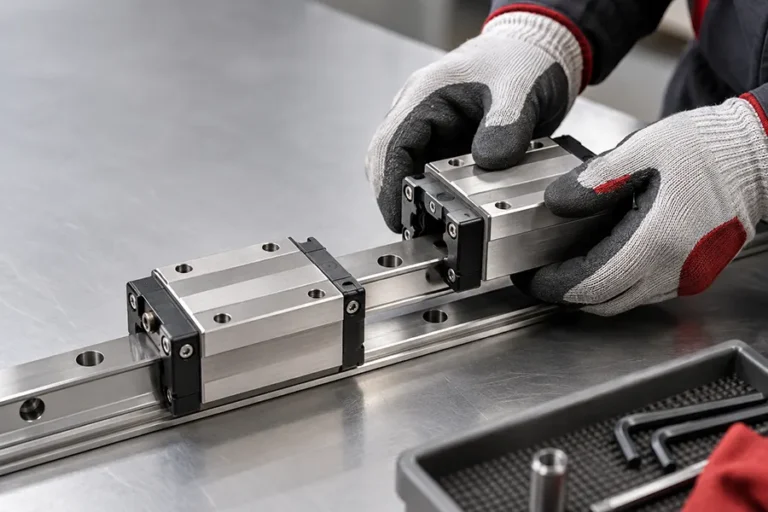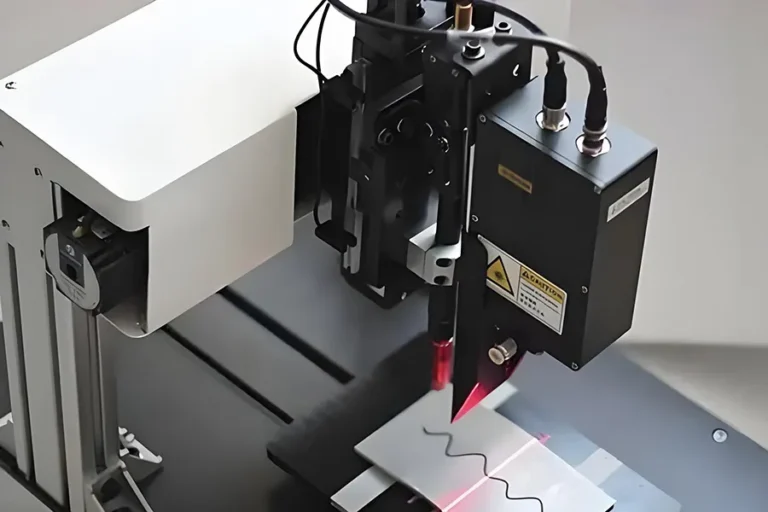
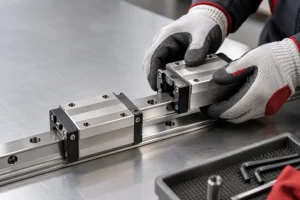

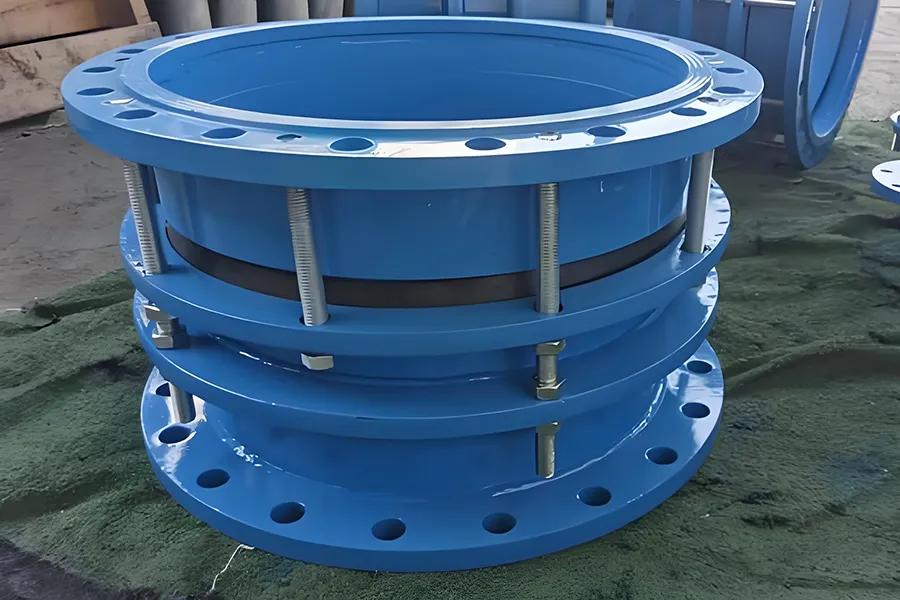
Telescopic mechanisms are the core structures enabling linear extension and retraction; they are widely used in construction machinery, automation equipment, robotics, and warehousing systems. These mechanisms vary significantly in terms of extension ratio, load capacity, precision, and cost. The following are ten of the most commonly used telescopic mechanisms in the industry:
1. Scissor-type telescopic mechanism
This relies on multiple sets of intersecting, hinged linkages; a hydraulic cylinder or motor drives the rotation of the linkages to achieve extension and retraction. It offers a high extension ratio and a compact retracted size. It is frequently used in lifting platforms and equipment, though it suffers from limited lateral rigidity and a tendency to shift under heavy loads.
2. Multi-stage nested sleeve mechanism
Multiple sleeve sections slide within one another, driven by hydraulic cylinders or cables; this design is widely used in crane booms and forklift masts. It allows for long strokes and offers high rigidity, making it suitable for heavy loads. However, it requires high machining precision and has a relatively high self-weight.
3. Hydraulic cylinder telescopic mechanism
Extension and retraction are achieved by using hydraulic fluid to drive a piston. It delivers high thrust and smooth operation, making it the mainstream solution for construction machinery. Available in single- or multi-stage configurations, it is suitable for heavy loads and harsh operating conditions; however, it requires a hydraulic system, and oil leakage is a primary point of failure.
4. Electric linear actuator (electric cylinder) mechanism
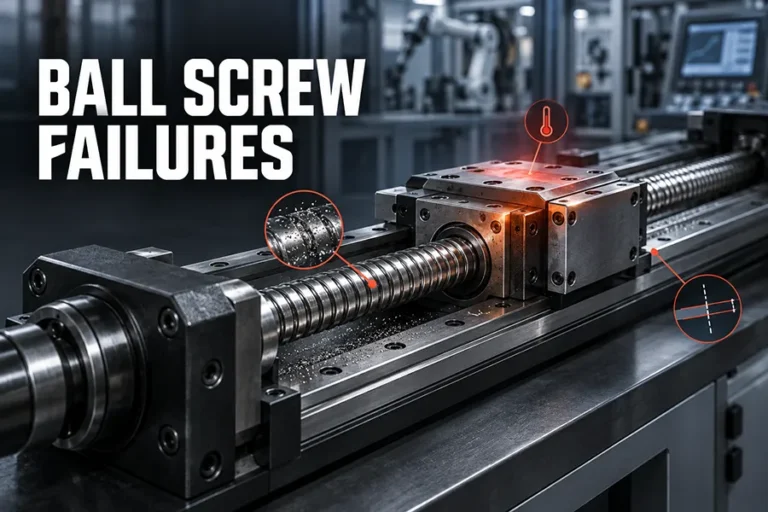
A motor drives a lead screw to convert rotary motion into linear motion. It offers simple electronic control, high positioning accuracy, and position feedback capabilities. Commonly used in automation and medical equipment, it provides moderate thrust but is unsuitable for applications requiring extremely long strokes or heavy loads.
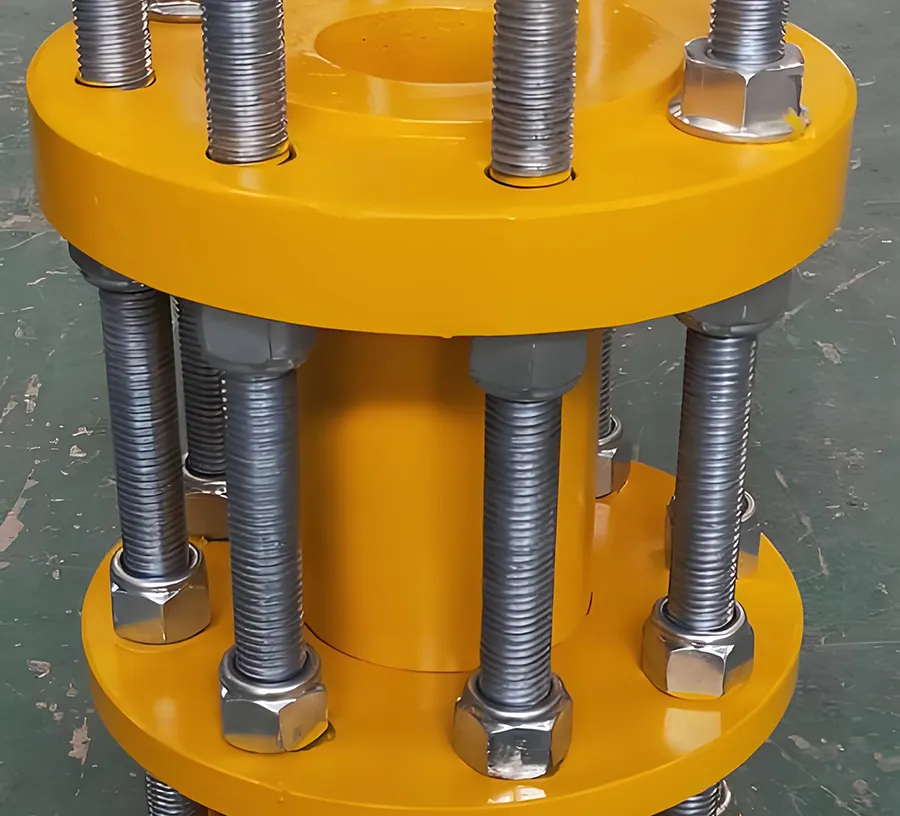
5. Rack-and-pinion telescopic mechanism
A rotating gear drives a rack to achieve linear extension and retraction. It offers high speed, unlimited stroke length, and excellent repeatability. It is frequently used in machine tool feed systems and automated slide units; however, it is prone to backlash, and shock loads can easily damage the gear teeth.
6. Threaded sleeve mechanism
Axial extension and retraction are achieved through the relative rotation of internally and externally threaded sleeves. It features inherent self-locking capabilities, meaning it will not retract when power is cut. Commonly found in jacks and manually adjustable supports, it operates slowly and is suitable for fine adjustment and static support rather than high-speed reciprocating motion.
7. Cable and pulley telescopic mechanism
This system combines a hydraulic cylinder with a wire rope and pulley assembly to achieve synchronous extension and retraction of multi-stage boom sections, thereby reducing the number of cylinder stages and the overall weight of the boom. Widely used in truck-mounted cranes and mobile cranes, it offers good load-bearing capacity; however, the wire ropes are subject to wear and require regular maintenance.
8. Synchronous belt extension mechanism
Power is transmitted via a synchronous belt to drive extension and retraction; the structure is lightweight, operates quietly, and moves rapidly. It is suitable for high-speed, automated robotic arms handling light loads, though load capacity is limited, and belt aging can affect precision.
9. Crank-slider extension mechanism
The rotation of a crank drives a slider in a reciprocating linear motion; as a type of linkage mechanism, it is simple and reliable in structure. It is commonly used in short-stroke reciprocating equipment, though the stroke length is constrained by the crank radius, making long-stroke extension impossible.
10. Pneumatic extension cylinder mechanism
Compressed air drives the piston for extension and retraction; this system offers low cost, rapid response, and good explosion-proof properties. It is widely used for assembly line tooling and fixtures, though output force depends on air pressure, positioning accuracy is moderate, and an external air supply is required.
Summary
Key factors for selection include the extension ratio, load magnitude, precision, speed, and the need for self-locking capabilities. Telescopic or hydraulic systems are preferred for heavy-load, long-stroke applications; electric cylinders or rack-and-pinion systems are chosen for light-load, high-precision tasks; and pneumatic cylinders or crank-slider mechanisms are suitable for short-stroke reciprocating motion. Design considerations must also address guidance, clearance compensation, and wear maintenance to ensure the mechanism’s long-term, stable operation.