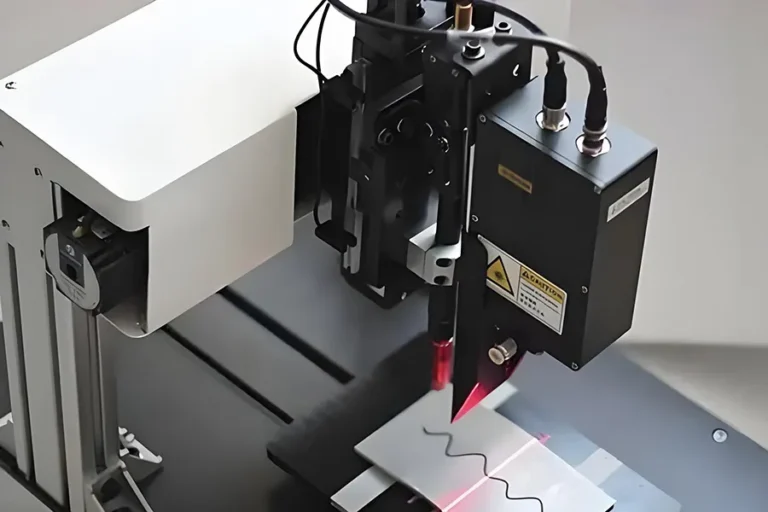
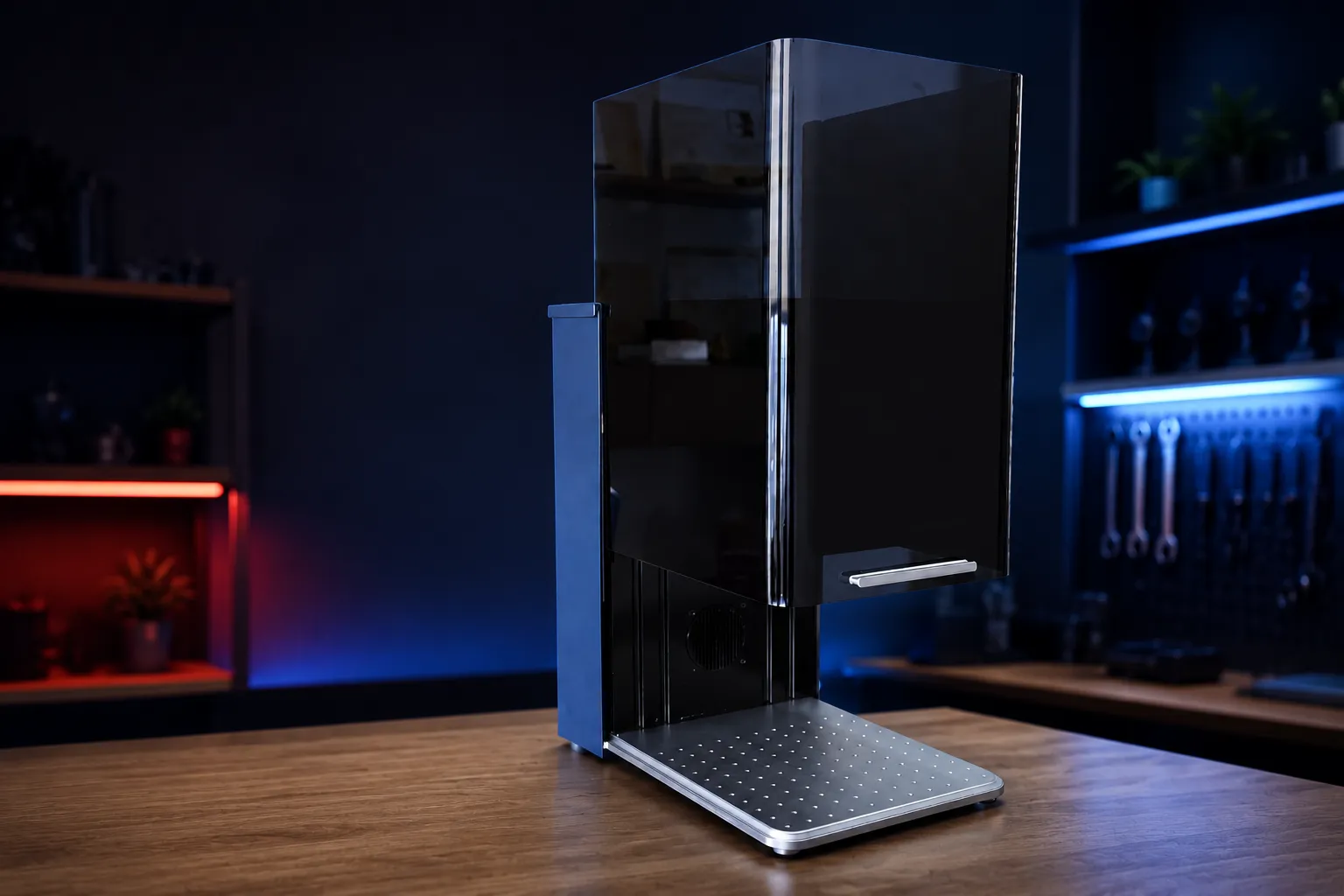
Single-wavelength laser engraving equipment often suffers from the dilemma of “weak engraving of metals and rough cutting of non-metals.” Dual laser engraver systems have emerged to address this issue. Utilizing a coaxial composite optical path and dual-path independent control technology, they achieve seamless switching between metal and non-metal processing. One device replaces two single-wavelength devices, significantly reducing equipment investment and debugging costs, and is suitable for all scenarios of industrial production and precision machining.
1. Dual Laser Engraver
Industrial-Grade Parameters and Design Highlights The module adopts an integrated and compact structure, compatible with mainstream engraving and marking machines. Its core parameters meet the needs of high-frequency industrial operations, offering outstanding stability and compatibility.
2. Core Design Highlights of Dual Laser Engraver
2.1 Processes both metals and non-metals
A 60W MOPA fiber red light is used for metal processing, while a 40W diode blue light can be used for precision processing and cutting of non-metallic materials such as wood, leather, and paper.
2.2 48MP Vision Positioning Camera
Equipped with a 48MP high-precision vision positioning camera, it easily obtains accurate previews of the entire working area, enabling faster and more accurate alignment.
2.3 Supports Multiple Processing Techniques
3D relief carving, color carving, metal cutting, and non-metal engraving and cutting processes are all supported. Contact UMW Maker if you have any needs.
2.4 Conveyor Belt Extends Processing Size
The conveyor belt can expand the processing area compared to previous methods, and batch processing can be achieved when combined with a camera.
2.5 Compatible with Rotary Axles
When used with a conveyor belt for batch processing, the processing area can reach 250 × 900 mm.
3. Typical Application Scenarios
3.1 Metal Processing (60W MOPA Laser Source)
Compatible with various metals such as stainless steel, carbon steel, aluminum, and copper. It can perform deep marking, QR code/serial number traceability, and color anodizing marking. Applications include thermos cups, knives, automotive parts, metal nameplates, and jewelry engraving. The marking effect is clear and durable, meeting industrial traceability standards.
3.2 Non-metallic Processing (40W Diode Laser Source)
Compatible with wood, acrylic, leather, glass, stone, PCB circuit boards, etc., enabling cutting, hollowing, frosting, and fine marking. Applications include wooden crafts, advertising signage, custom leather goods, and glass decoration. Processed edges are clean and burr-free, with high detail reproduction.
3.3 Composite Processing (Dual Light Source Collaboration)
For mixed-material workpieces, such as metal + wood keychains, metal frames + acrylic panels, metal ornaments + wooden gift boxes, etc., “non-metallic cutting + metal marking” can be completed in a single clamping operation, eliminating the need to change equipment, reducing processes by 50%, and significantly improving order delivery efficiency.
Summary
The UMW Maker dual laser engraver, with a coaxial composite optical path at its core, overcomes the material limitations of single-wavelength equipment, achieving one-stop processing of “metal + non-metal”. Its industrial-grade stability, flexible power configuration, and convenient integrated design allow small studios, processing plants, and equipment integrators to cover all types of orders with a single device, reducing equipment investment, saving space, and improving efficiency. It is currently the most cost-effective all-around solution in the laser engraving processing field.
Frequently Asked Questions
1. Can a dual laser engraver engrave both metal and wood?
Yes. The diode laser is typically used for wood, while the infrared or fiber laser is used for metal. The exact capabilities depend on the laser configuration.
2. Can a dual laser engraver cut metal?
Most desktop dual laser engravers are designed to mark metal rather than cut it. Cutting metal requires significantly higher power and specialized equipment.
3. Can it cut acrylic?
A diode laser can cut certain acrylic materials, especially dark or opaque acrylic. Transparent acrylic may not absorb the wavelength of a blue diode laser effectively.