Wood finishing plays an important role in furniture, flooring, doors, cabinets, panels, and decorative building materials. A good finishing process can improve surface appearance, protect the wood, reduce defects, and increase product value. Among the most common finishing methods, roll coating and spray coating are two widely used options.
Both methods can produce high-quality results, but they are suitable for different production needs. Roll coating is often used for flat panels and continuous production, while spray coating is more flexible for irregular shapes, edges, curves, and assembled parts. Understanding the difference between these two methods can help manufacturers choose the right process for their workshop.
For readers who want to understand the basic principle, machine structure, and working process of roller coating systems, this guide on how roll coating equipment works gives a useful overview of rollers, doctor blades, conveyor systems, UV curing, and different types of roll coating machines.
1. What Is Roll Coating?
Roll coating is a finishing method that uses rollers to apply a controlled layer of coating material onto a surface. The workpiece usually moves through the machine on a conveyor, while the coating roller transfers paint, primer, UV coating, oil, or other finishing materials onto the panel.
This method is especially suitable for flat and regular surfaces. In woodworking, roll coating is commonly used for plywood, MDF, flooring, doors, furniture panels, cabinet boards, and decorative panels. Because the coating thickness can be controlled more consistently, roll coating is often preferred in high-volume production.
2. What Is Spray Coating?
Spray coating uses spray guns to atomize coating material and apply it onto the surface of a workpiece. It can be done manually or through automatic spray painting systems. Compared with roll coating, spray coating is more flexible because it can reach edges, grooves, curves, and complex shapes.
This makes spray coating useful for furniture parts, assembled products, carved panels, chairs, doors with profiles, and other non-flat surfaces. However, spray coating usually creates more overspray, requires better ventilation, and may have lower material utilization compared with roll coating.
3. Coating Efficiency and Material Usage
One of the biggest advantages of roll coating is material efficiency. Since the coating is transferred directly from the roller to the surface, there is usually less waste than spray coating. The process can also provide stable coating thickness across large flat panels.
Spray coating offers more flexibility, but part of the coating material may be lost as overspray. This means factories may need stronger dust collection, air filtration, and paint recovery systems. For companies processing a large number of flat panels, roll coating can often reduce coating waste and operating cost.
4. Surface Quality and Finish Consistency
Roll coating can produce a smooth and uniform finish when the substrate is flat, clean, and properly sanded. It is suitable for consistent primer application, base coating, top coating, and UV finishing lines. Because the machine settings are repeatable, the final surface quality is easier to control during continuous production.
Spray coating can also achieve excellent surface quality, especially for decorative products and shaped parts. However, the result depends more on spray gun setup, operator skill, air pressure, spray distance, coating viscosity, and drying conditions. If these factors are not controlled well, problems such as orange peel, sagging, uneven gloss, or dry spray may appear.
5. Production Speed and Automation
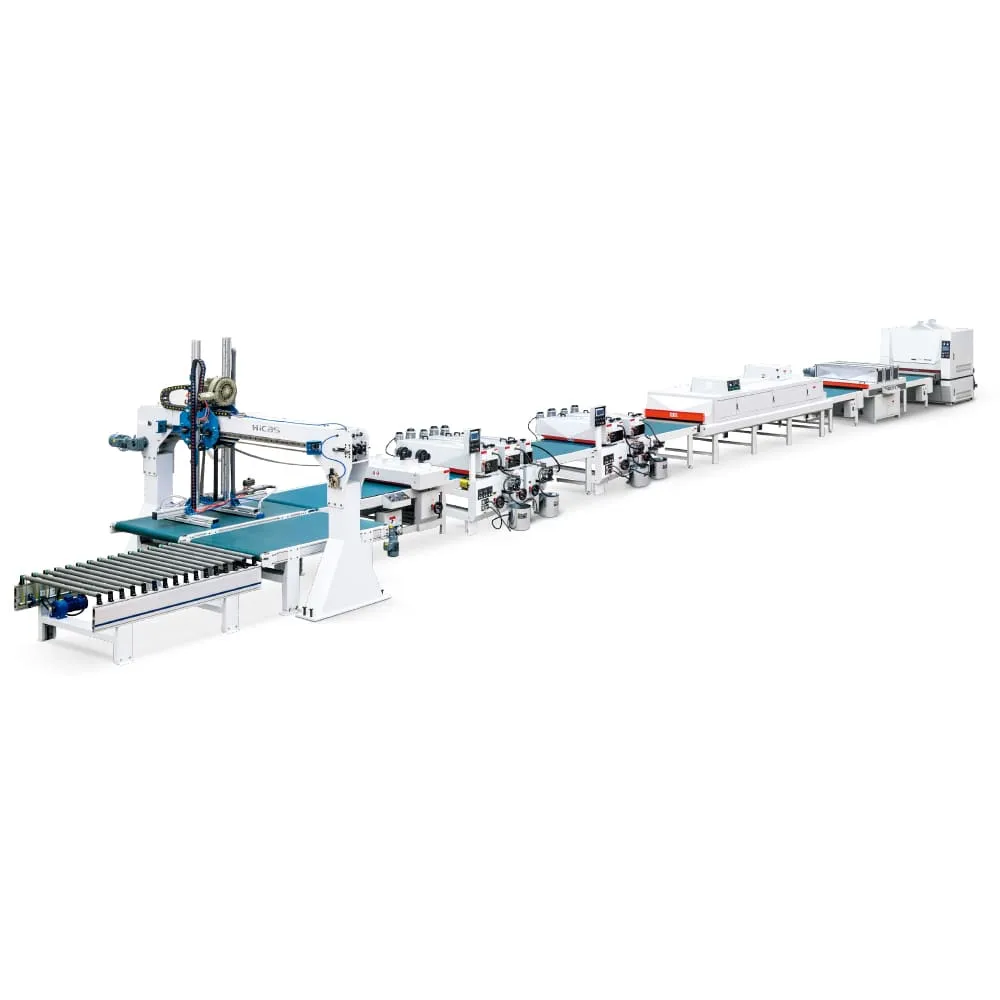
For factories with high-volume panel production, roll coating is usually easier to automate. A roll coating line can be connected with sanding machines, dust removal systems, UV curing machines, and drying equipment. This helps create a continuous finishing process with stable output.
Spray coating can also be automated, but it may require more complex control when dealing with irregular shapes. Automatic spray painting lines are very useful for furniture and door production, but for simple flat panels, roll coating is often more efficient.
6. Best Applications for Roll Coating
Roll coating is a strong choice when the product has a flat surface and requires consistent coating thickness. Common applications include:
- MDF and plywood panels
- Wood flooring
- Cabinet boards
- Flat doors
- Furniture panels
- Decorative boards
- UV primer and topcoat application
For these products, roll coating can improve production efficiency, reduce coating waste, and provide stable surface quality.
7. Best Applications for Spray Coating
Spray coating is better when the product shape is complex or when the surface cannot be coated effectively by rollers. It is commonly used for:
- Chairs and assembled furniture
- Curved or profiled doors
- Carved wood parts
- Edges and side surfaces
- Decorative irregular components
- Small batch custom products
For workshops that handle many product shapes, spray coating may offer better flexibility.
8. Choosing the Right Equipment for Your Factory
The best choice depends on product type, production volume, coating material, finish requirements, labor cost, and available workshop space. If your factory mainly processes flat panels, a roll coating line may provide better efficiency and coating consistency. If your factory handles complex furniture parts, spray coating may be more suitable.
Some manufacturers use both methods together. For example, roll coating can be used for flat surfaces, while spray coating is used for edges, shaped parts, or special finishes. If you are comparing equipment for panel finishing, HICAS provides roll coating machine options that can be used as a reference for woodworking coating production.
Conclusion
Roll coating and spray coating are both valuable finishing methods, but they serve different production needs. Roll coating is ideal for flat panels, high-volume production, consistent film thickness, and lower material waste. Spray coating is better for irregular shapes, edges, curves, and flexible custom finishing. By understanding the strengths of each process, manufacturers can choose the right coating method and improve both production efficiency and final product quality.