
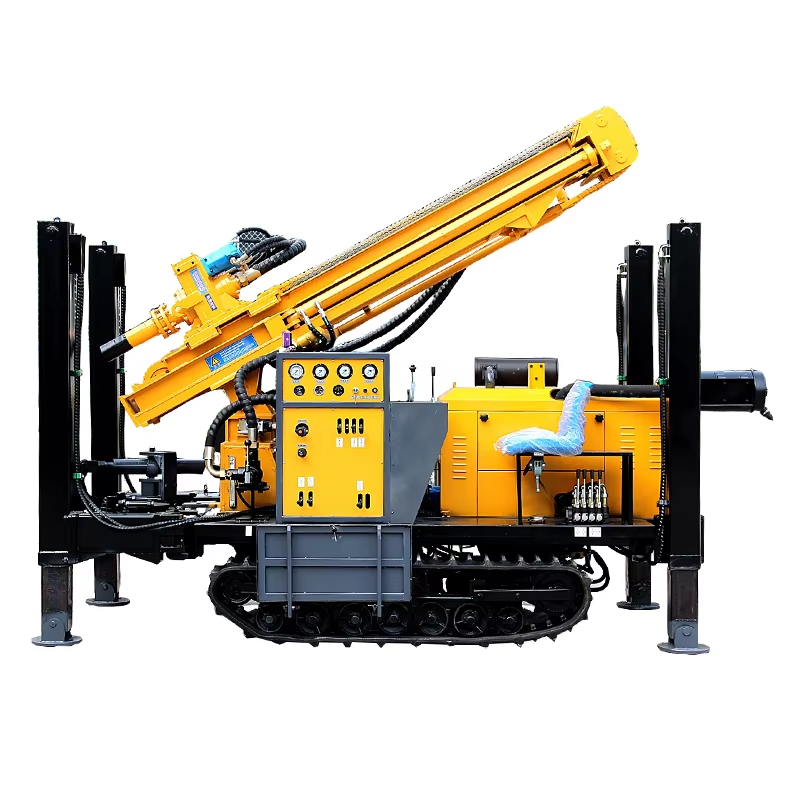
Choosing the right water well drilling rig is one of the most important decisions in a groundwater, irrigation, or rural water supply project. The wrong machine can lead to slower drilling speed, higher fuel consumption, excessive wear on drilling tools, or poor borehole stability. Before comparing models, buyers should first understand the working conditions of the project site, including drilling depth, soil type, rock hardness, access conditions, and expected water output.
A water well drilling rig is designed to create boreholes through soil, gravel, clay, or rock until it reaches underground water sources. Different rigs use different drilling methods, such as rotary drilling, percussion drilling, or DTH drilling, depending on the formation. For readers who want a basic explanation of the machine structure and drilling process, this guide on how a water well drilling rig works provides a helpful introduction.
1. Consider the Ground Formation
The first factor to evaluate is the geological condition. Soft soil, sand, clay, and gravel usually require different drilling methods compared with hard rock formations. In loose or shallow formations, simpler drilling systems may be enough. However, when the project involves hard rock, fractured rock, or deeper groundwater layers, a more powerful hydraulic rig or DTH drilling system may be required.
For hard formations, drilling efficiency depends heavily on torque, impact power, air pressure, and the quality of the drill bit and hammer. Choosing a rig without enough power may reduce penetration speed and increase tool damage.
2. Match the Rig to the Required Drilling Depth
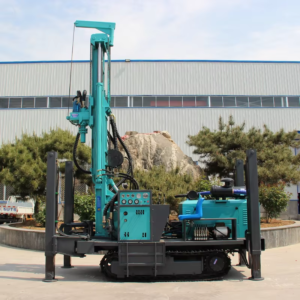
Drilling depth is another key consideration. A small portable rig may be suitable for shallow agricultural wells, while deeper commercial or community water wells often require crawler-mounted hydraulic rigs with stronger lifting capacity and more stable performance.
Before purchasing, it is important to confirm the expected drilling depth, borehole diameter, rod length, and compressor requirements. A rig designed for 180 meters may not be the best choice for a project that regularly requires 250 meters or more. Buyers should leave enough performance margin instead of selecting a machine that only barely meets the project requirement.
3. Evaluate Mobility and Job Site Access
Water well projects are often carried out in rural areas, mountainous regions, farms, construction sites, or remote villages. In these conditions, mobility matters. Crawler-mounted rigs are useful for uneven ground and off-road movement, while trailer-mounted rigs may be suitable for sites with easier road access.
If the drilling team needs to move frequently between job sites, transportation size, setup time, and operating crew requirements should also be considered. A machine that is easy to move and position can save significant time across multiple projects.
4. Check Compressor and Drilling Tool Compatibility
Many water well drilling rigs require a matched air compressor, especially when using DTH drilling methods. Air pressure and air volume must be suitable for the drilling depth, hole diameter, and hammer size. If the compressor is too small, drilling efficiency will be low. If it is oversized, fuel costs may become unnecessarily high.
Drill rods, DTH hammers, drill bits, and casing systems should also be selected according to the formation. Good compatibility between the rig, compressor, and drilling tools helps improve efficiency and reduce downtime.
5. Compare Product Options Before Making a Decision
Once the project requirements are clear, buyers can compare different machine types by drilling depth, power system, crawler or trailer design, hydraulic performance, and application range. For example, Zhejiang Xinyu Machinery lists several water well drilling rig options, including models for 180m, 200m, and 280m drilling depth, which can be used as a reference when comparing different specifications.
6. Do Not Ignore Safety and Maintenance
A water well drilling rig is heavy-duty equipment, so safety and routine maintenance should never be ignored. Operators should receive proper training, inspect hydraulic systems regularly, check drill rods and bits, and keep the machine clean after operation. Preventive maintenance helps reduce unexpected downtime and extends the service life of the equipment.
It is also important to follow local drilling regulations and environmental requirements. Proper casing installation, borehole protection, and responsible groundwater use can help protect water quality and reduce environmental risks.
Conclusion
The best water well drilling rig is not always the largest or most expensive one. The right choice depends on drilling depth, ground conditions, mobility needs, compressor matching, operating cost, and long-term maintenance. By understanding the project requirements first and then comparing suitable machine specifications, buyers can select equipment that improves drilling efficiency, reduces operating risk, and supports stable water access for agricultural, industrial, or community projects.