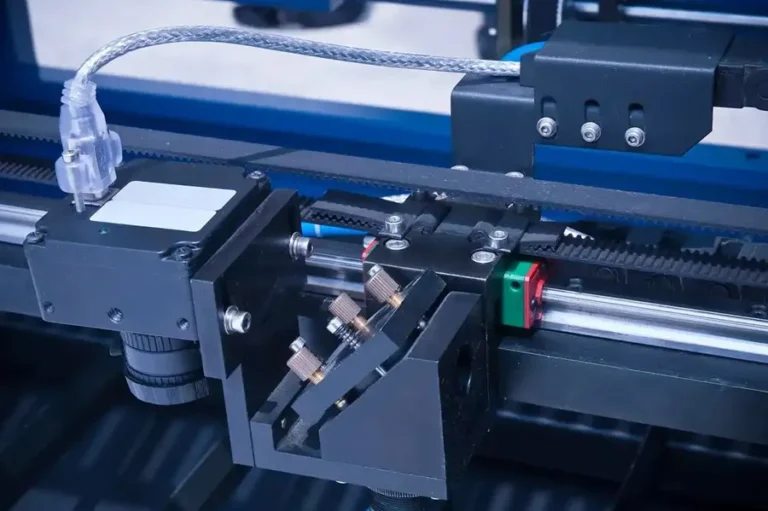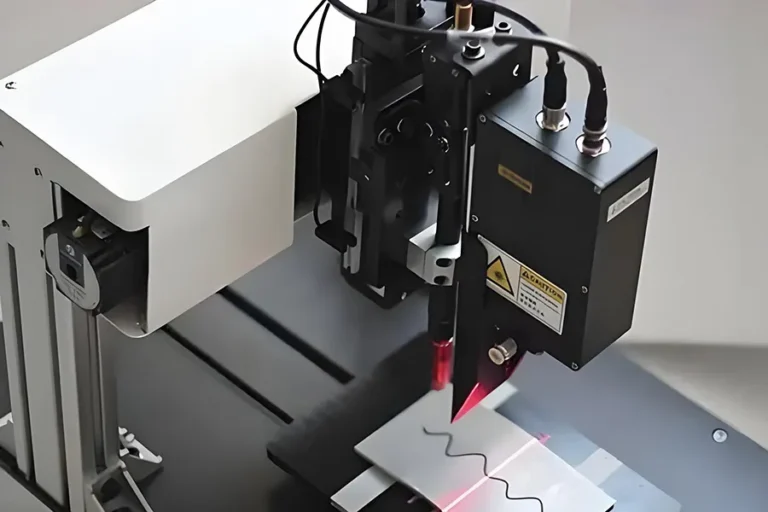
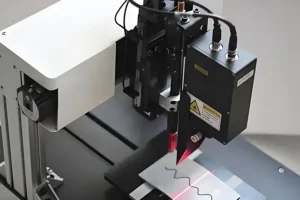

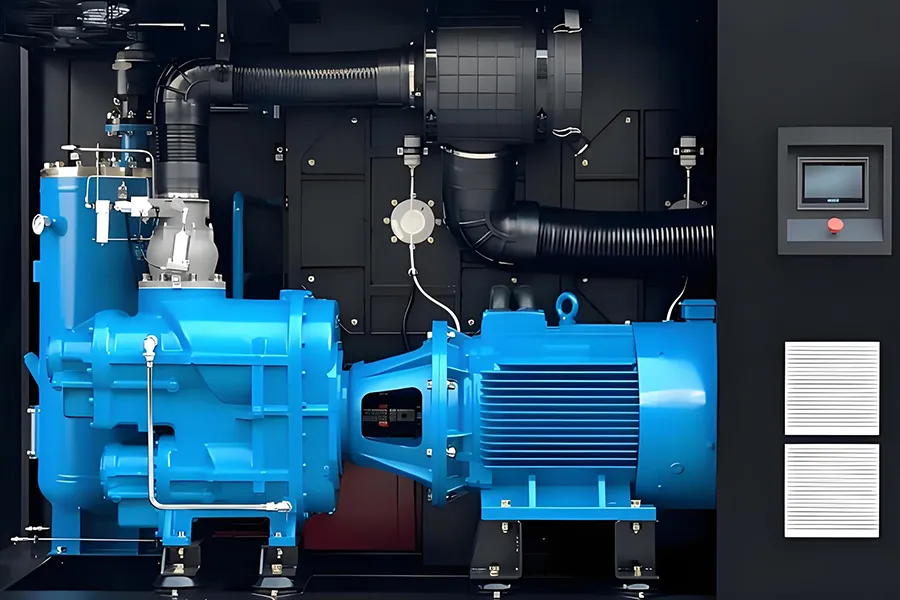
In the metal processing industry, fiber laser cutting machines have become synonymous with efficiency and precision. However, many companies, after investing in high-performance laser equipment, often try to cut costs on auxiliary equipment—air compressors—choosing cheaper, ordinary industrial air compressors. This is a seemingly cost-effective but actually expensive mistake.
1. Core Pain Point: Ordinary air compressors cannot meet the “special needs” of laser cutting
Laser cutting machines use a high-energy laser beam to irradiate the workpiece, instantly melting or vaporizing the material. Simultaneously, high-pressure gas (usually compressed air) blows away the molten material, forming a kerf.
1.1 The Function of Compressed Air
In this process, compressed air plays three key roles:
- Combustion and Cooling
When cutting certain materials (such as carbon steel), oxygen in the air reacts exothermically with the high-temperature metal, aiding the cutting process.
- Slag Dispersion
Removing molten metal from the kerf ensures a smooth, slag-free cut surface.
- Lens Protection
The high-speed airflow forms a barrier, preventing smoke and spatter from contaminating the expensive focusing lens.
1.2 Disadvantages of ordinary air
The compressed air produced by ordinary air compressors cannot reliably and purely perform these three tasks, mainly due to the following issues:
- Oil contamination
Even oil-free air compressors still contain trace amounts of oil vapor (from the atmosphere or internal lubrication). When this oil comes into contact with the high-temperature laser cutting head and protective lenses, it carbonizes and cokes, rapidly contaminating the optical lenses. This leads to laser energy attenuation, reduced cutting ability, and even lens burnout, resulting in extremely high replacement costs.
- Moisture problems
Compressed air contains a large amount of water vapor. Once this condenses into liquid water in the delicate air circuit and cutting head, the consequences are catastrophic. It mixes with metal dust generated during cutting to form a slurry, clogging solenoid valves and damaging sensors; splashing onto the workpiece affects cutting quality; more importantly, water droplets contacting the lenses can cause thermal stress cracking.
- Pressure and flow fluctuations
Laser cutting, especially during perforation and corner cutting, requires extremely high air pressure stability. Ordinary air compressors are prone to pressure pulsation during frequent start-stop cycles or load changes, leading to uneven cutting surfaces, incomplete cuts, or overheating, severely impacting processing quality and consistency.
2. The “Tailor-Made” Advantages of Dedicated Air Compressors
The so-called dedicated air compressor for laser cutting machine is not just a marketing concept, but a deeply integrated gas solution designed to address the aforementioned pain points. It typically integrates an air compressor, refrigerated dryer, precision filter, and air tank into a unified design and optimized match.
2.1 Ultimate Air Purification Capability
The core advantage of dedicated air compressors lies in their multi-stage filtration and drying system:
- Precision Filter
Employing multi-stage high-precision filters (such as a combination of P-grade, S-grade, and C-grade filters), it effectively removes oil, dust, and solid particles from compressed air, ensuring that the oil content of the output air is below 0.01ppm or even 0.003ppm, achieving an “oil-free” standard and completely preventing oil contamination from damaging the lenses.
- High-Efficiency Dryer
Built-in or integrated refrigerated/adsorption dryers maintain the compressed air dew point temperature stably between 2-10℃ or even lower, meaning the compressed air is essentially moisture-free at the factory, preventing condensation damage to the air path and cutting head.
2.2 Superior Stability and Response Speed
- Constant Pressure Air Supply
A dedicated air compressor for laser cutting machine optimized for the transient air consumption characteristics of laser cutting. Through more precise pressure control and a large-capacity air tank, it ensures highly stable air pressure and flow rate without any pulsations during the instant the laser head is activated and throughout the continuous cutting process, resulting in a uniform and smooth cut surface.
- Rapid Response
The optimized control system responds quickly to pneumatic commands from the laser equipment, achieving instantaneous pressure build-up and release, perfectly matching the requirements of high-frequency, complex cutting processes.
2.3 High Integration and Intelligent Control
- One-Stop Solution
Users do not need to assemble and debug multiple independent components themselves. The dedicated all-in-one unit is optimally matched before leaving the factory, offering plug-and-play functionality and saving installation space and debugging time.
- Intelligent Linkage
Many specialized air compressor for laser cutting machine supports communication and linkage with laser cutting machines, enabling synchronized start/stop and automatic air pressure adjustment based on cutting parameters. This not only saves energy but also greatly simplifies operation.
- Remote Monitoring and Early Warning
Equipped with an intelligent monitoring system, specialized air compressors can display operating status in real time, remind users to replace filters, and provide early warnings of malfunctions, enabling predictive maintenance and avoiding losses caused by unplanned downtime.
3. Economic Considerations: Is a Specialized Air Compressor a “Cost” or an “Investment”?
Many users only see the higher initial purchase price of specialized air compressors compared to ordinary air compressors, but overlook the long-term comprehensive benefits they bring:
- Saving Consumable Costs
Protecting lenses from contamination extends their lifespan several times over; this alone can result in substantial annual savings on lens costs.
- Reduced Downtime Losses
Stable operation avoids frequent shutdowns for cleaning and maintenance due to gas quality issues, ensuring continuous production line operation and improving overall equipment efficiency (OEE).
- Enhanced Product Quality
Stable cutting quality reduces secondary processing and scrap rates, enhancing customer satisfaction and market competitiveness.
- Reduced maintenance costs
The integrated design minimizes leak points in external piping, and intelligent early warning systems prevent unexpected major overhauls.
Summary
Equipping a laser cutting machine with a dedicated air compressor is not an unnecessary expense, but a strategic investment related to production quality, equipment lifespan, and long-term operating costs. It’s like equipping a high-performance sports car with professional-grade tires; only a perfect match can unleash the equipment’s full potential. When selecting one, please consider it an integral part of the laser cutting system, taking it into account in conjunction with the laser host to truly achieve cost reduction and efficiency improvement, ensuring a competitive edge in the market.