
A linear motor is a type of motor that directly converts electrical energy into linear motion mechanical energy. Its working principle is similar to that of a traditional rotary motor, but through specific structural design, it achieves linear motion rather than rotational motion.
Linear motors are widely used in automation equipment, machine tools, and robotics, and are gaining increasing attention due to their advantages such as fast response speed, high positioning accuracy, and simple structure.
1. How Linear Motors Work?
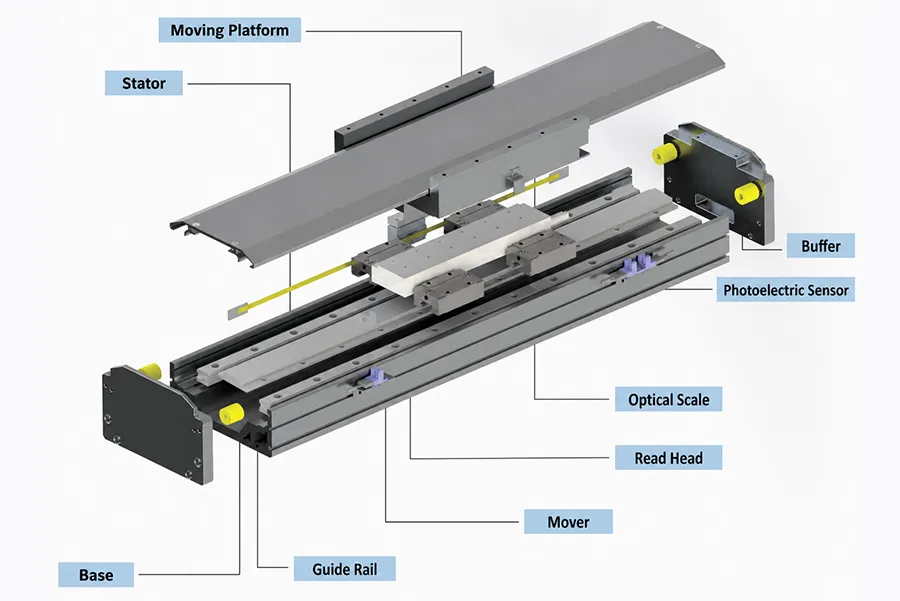
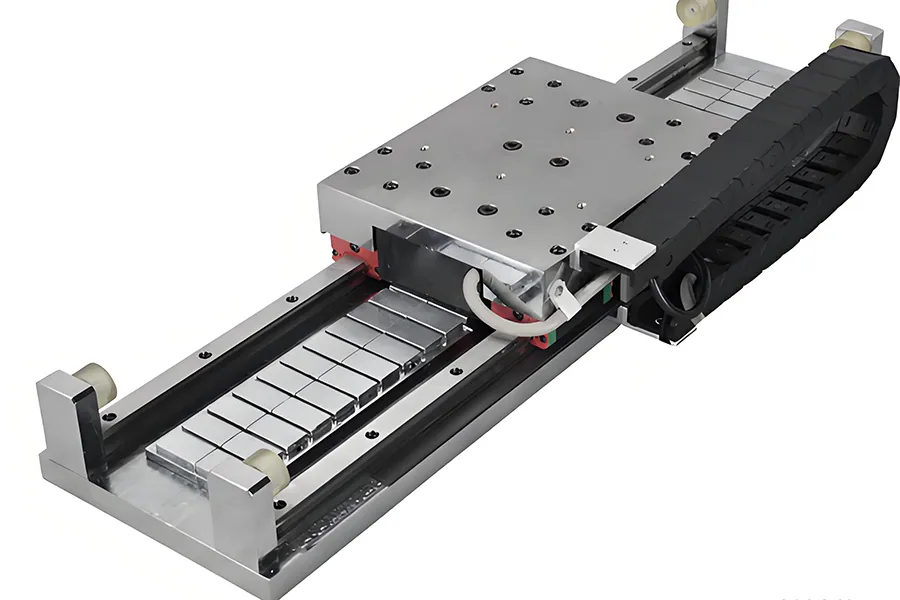
The basic principle of a linear motor is based on electromagnetic induction. Typically, a linear motor consists of a stator and a mover. The stator contains multiple coils that, when energized, generate a magnetic field that varies along the length of the stator. The mover is a permanent magnet or coil that, under the influence of the stator’s magnetic field, moves linearly along the stator’s direction. Depending on the construction of the stator and mover, linear motors can be classified into various structures such as flat plate, U-slot, and tubular types.
2. Driving Method of Linear Motors
Linear motors are driven by three-phase alternating current. When current passes through the stator windings, it generates a moving magnetic field on the stator. The moving magnetic field interacts with the magnetic field on the mover, generating thrust that propels the mover along the direction of the magnetic field. This process is similar to the rotation of the rotor in a traditional motor driven by electromagnetic force, except that in a linear motor, the mover moves along a straight line.
To more precisely control the operation of a linear motor, a position feedback device, such as an optical encoder or magnetic encoder, is usually required. These position feedback devices allow for real-time monitoring of the mover’s position and communication with the controller, enabling precise positioning and speed control.
3. Advantages of Linear Motors
3.1 High Precision and High Speed
Linear motors eliminate the need for mechanical transmission devices, reducing sources of error and resulting in higher positioning accuracy. Furthermore, linear motors can directly drive the load, eliminating the need for intermediate gear reduction mechanisms, thus resulting in faster speed response.
3.2 Simple Structure and Space Saving
The structure of a linear motor is simpler than that of a traditional rotary motor + rack and pinion transmission system, reducing space requirements. This is especially beneficial in automated production lines, saving equipment volume and improving the flexibility of the overall layout.
3.3 Low Noise and Low Maintenance
Since linear motors do not have traditional transmission chains or belts, they experience less friction during operation, resulting in lower noise and reduced maintenance work caused by mechanical wear.
3.4 Applications of Linear Motors
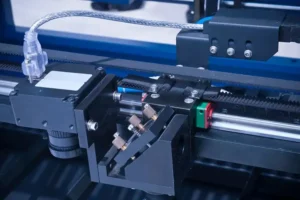
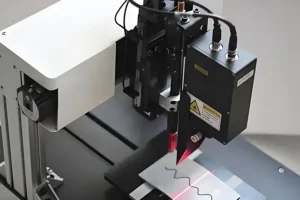
With the development of linear motor technology, its application range is becoming increasingly wide. Linear motors play a vital role in high-precision, high-speed applications such as semiconductor manufacturing equipment, laser cutting machines, CNC machine tools, and electronic assembly equipment. Furthermore, linear motors are widely used in automated logistics, medical devices, and rail transportation.
Summary
As a highly efficient and precise transmission device, linear motors are driving the improvement of automation levels across various industries. Their core principle is based on electromagnetic induction, and through optimized design, high-precision, high-speed linear motion can be achieved, giving linear motors an irreplaceable position in modern industrial automation.