

1. Overall Market Forecast for 2027
1.1 Sales Volume and Market Size Projections
In 2027, sales of brand-new construction machinery units in Guinea are projected to reach 7,000–8,300 units, an increase of 11%–17% year-on-year compared to 2026; the market size for new machinery is estimated at approximately US$1.20–1.46 billion.
Breakdown of demand structure:
– Open-pit mining support equipment: 71% (Bauxite mining forms the core base; Simandou iron ore production continues to expand; equipment renewal is ongoing in the Boké, Boffa, and Kindia mining areas)
– Infrastructure construction support: 21% (Trans-Guinean Railway, Morebaya deep-water port, mining area roads, and civil engineering for alumina smelting parks)
– Sand and aggregate production, camp construction, and municipal infrastructure: 8%
⚠️ Important Note: The market for refurbished used equipment is approximately 60% the size of the new machinery market; a large number of local small-scale mine owners and private contractors prioritize purchasing low-priced used machinery, continuously squeezing the market for low-end new equipment; the equipment rental industry is expanding rapidly, with rental companies becoming key purchasers of new machinery.
1.2 Four Core Growth Drivers
Incremental demand released by the continued commissioning of the Simandou iron ore project (Largest source of new demand)
The 630-kilometer heavy-haul Trans-Guinean Railway is entering a phase of stable operation, and the Morebaya deep-water port continues to be upgraded; mining operations (overburden removal, waste dump management, and access roads) continue to generate demand for equipment; civil engineering for smelting plants associated with Phases II and III of the project is underway, driving demand for medium-to-large tonnage mining machinery.
Localization and upgrading of the bauxite industry
Guinea holds one-third of the world’s bauxite reserves; the government is implementing policies that link mining rights to the construction of alumina plants, thereby restricting the export of unprocessed raw ore; construction continues on multiple alumina projects in Boké and Boffa, creating steady demand for equipment related to overburden removal, plant civil engineering, and ore transport.
Concentrated replacement of existing heavy-duty equipment
Mining equipment operates under high-intensity, two-shift schedules year-round, with wear accelerated by abrasive red clay and muddy conditions during the rainy season. Over 72% of the construction machinery in the region has been in service for more than eight years; as maintenance costs continue to rise, large mining groups are replacing old fleets with new machines in bulk.
Continued investment by Chinese mining enterprises
Chinese enterprises such as Chinalco and the Winning Consortium have long-standing operations in bauxite mining. The Simandou project has attracted numerous Chinese subcontractors who prefer domestic brands for equipment procurement, thereby establishing a stable base for sales.
1.3 Market operating conditions and regional characteristics
High temperatures and humidity prevail year-round, with the rainy season spanning June to October; the red soil is highly abrasive, and fuel quality is generally poor. Standard equipment specifications include: three-stage oil-bath air filters, thickened wear-resistant chassis, widened tracks, enhanced cooling systems, and waterproof/dustproof wiring harnesses; direct-injection engine models are prioritized.
Market segmentation: Large Chinese mining contractors have stable capital, whereas local small- and medium-sized mine owners face capital constraints and are extremely sensitive to purchase prices.
Geographic distribution: Boké, Boffa, and Kindia are the core bauxite mining zones; the Simandou corridor in the southeast is the primary hub for iron ore operations; and infrastructure projects are concentrated in Conakry and the port of Kamsar.
Seasonality: Field operations are hampered during the rainy season; the dry season—running from November to the following May—marks the annual peak for equipment procurement.
2. Demand forecast for key equipment categories (Strategic focus for 2027)
2.1 30–50 ton mining excavators (Core flagship models)
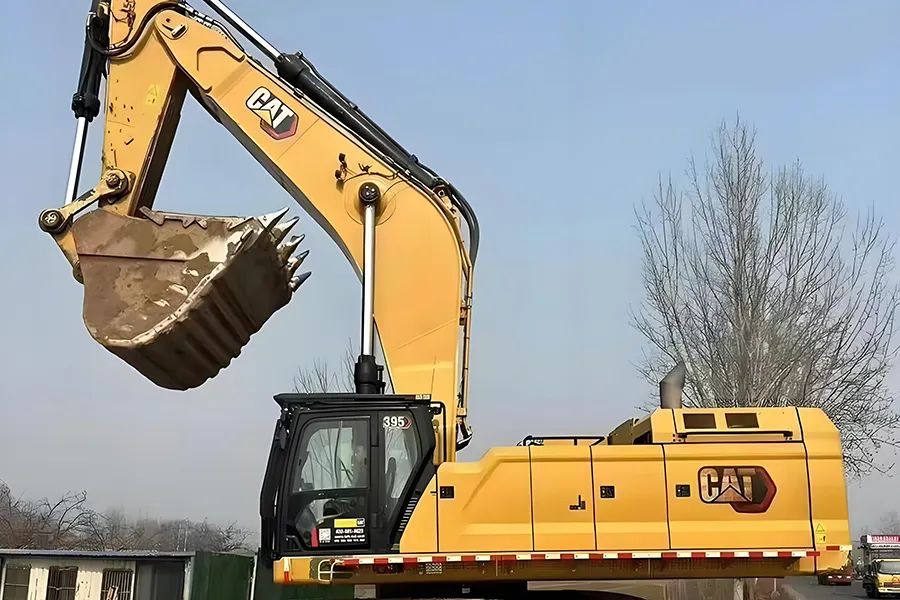
Essential for bauxite overburden removal and iron ore earthworks; these are the highest-value models in the market (specifically the 335, 370, and 490 tonnage classes) and represent a key competitive segment for Chinese brands.
2.2 20–26 ton medium-sized excavators (general-purpose auxiliary models)
Highly versatile for mine road maintenance, camp construction, and supporting civil engineering works.
2.3 Large wheel loaders and 50–90 ton wide-body dump trucks
Essential for loading/unloading at bauxite stockpiles and short-haul transport; strong demand for fleet-style procurement.
Note: Ultra-large mining excavators (over 70 tons) and 100-ton class rigid mining trucks are primarily procured directly by leading international mining contractors. Caterpillar and Komatsu hold traditional advantages here; it is difficult for domestic Chinese brands to make significant inroads in the short term.
2.4 Bulldozers and motor graders
Routine requirements for leveling mine waste dumps and maintaining mine access roads.
2.5 Mobile crushing stations and complete concrete equipment sets
Steady incremental demand for supporting alumina plant facilities and sand/aggregate projects.
Risk Warning: Overall demand for small/mini excavators (6–13 tons) is limited; large-scale inventory stocking is not recommended.
3. Key Policy Compliance “Red Lines” (Critical Pitfalls to Avoid for Exports)
3.1 COC (Certificate of Conformity) + ECTN (Electronic Cargo Tracking Note) — Both Mandatory
Construction machinery falls under the ANGNOR control list. A COC must be obtained prior to shipment; it cannot be issued retroactively at the destination port. Goods lacking this certificate are subject to immediate seizure and fines ranging from 10% to 20% of the cargo value. An ECTN is mandatory for all sea freight; customs clearance is impossible without it. A CE certificate cannot substitute for a COC.
3.2 Import tariffs and tax exemption policies
Base tariff for construction machinery is 3%, plus 18% VAT. For legitimate large-scale mining investment projects, tax exemption status under investment laws can be applied for with a valid mining license. Urge clients to secure tax exemption approvals before finalizing deals to significantly reduce total procurement costs.
3.3 Risk of ongoing changes in mining policy
The government periodically reviews mining licenses and enforces stricter requirements regarding local employment and downstream mineral processing. Small, unlicensed mines face the risk of immediate shutdown. When developing mining clients, always verify official documentation confirming a complete and valid mining license.
3.4 Stricter Regulation of Used Equipment
Customs authorities are rigorously inspecting for tampered hour meters and ground-off or altered machine nameplates; enforcement and penalties regarding the inspection of aging used equipment are intensifying.
3.5 Customs Documentation Requirements
It is recommended to attach French translations to commercial invoices and certificates of origin; information across the machine nameplate, engine serial number, and customs declaration documents must be perfectly consistent; customs authorities reserve the right to re-evaluate valuations, and under-declaring cargo value is strictly prohibited.
4. Market Competitive Landscape
4.1 European, American, and Japanese Brands (e.g., Caterpillar, Komatsu)
Strengths: Deep-rooted relationships with leading international mining groups and foreign-funded general contractors for the Simandou project; distinct advantages in ultra-large tonnage mining machinery and long-term maintenance agreements.
Weaknesses: High prices for new machines and long delivery lead times.
4.2 Chinese Brands (e.g., Sany, XCMG, LiuGong, SDLG)
Currently hold over 65% of the market share for new machine imports; core customers include Chinese-funded mining enterprises, large local rental companies, and small-to-medium-sized private mines.
Strengths: Excellent cost-performance ratio; ability to rapidly customize heavy-duty versions for mining sites; flexible delivery; high parts interchangeability.
Strategic Breakthrough: Establishing regional spare parts warehouses in Conakry to serve major mining areas.
4.3 South Korean Brands (e.g., Hyundai, Doosan)
Competitors filling the mid-range market segment; overall market share remains limited.
4.4 Used Equipment Traders
Continuously disrupting the low-end market and capturing a significant portion of procurement demand from small-scale local mine owners.
5. Seven Key Risks in Guinea (2027) – A Guide to Avoiding Pitfalls in Sales
5.1 Political and Policy Volatility Risks (Primary Long-term Risk)
Guinea has experienced coups, leading to uncertainty regarding policy continuity; mining taxes, fees, and foreign exchange regulations are subject to sudden adjustments; project approval processes are lengthy, carrying the risk of work stoppages. Business operations should prioritize established, stable mining regions like Boké and Boffa, while exercising caution when developing small mine sites in remote areas.
5.2 Foreign Exchange Shortage Risks
The Guinean Franc experiences severe exchange rate volatility, and the Central Bank faces tight US dollar reserves; local private enterprises face lengthy approval processes for purchasing foreign currency.
Risk Control: Insist on a 30% down payment for new customers, with the balance settled upon presentation of the bill of lading copy; strictly control sales on credit and exercise caution regarding deferred payments; prioritize engagement with Chinese-funded mining enterprises backed by offshore capital.
5.3 High Inland Logistics Costs
The Port of Conakry suffers from chronic congestion; inland transport distances from the port to the Boké and Simandou mining areas are vast, resulting in exorbitant trailer costs; there is a high risk of port demurrage and transit damage for large-scale construction machinery. Exercise caution when accepting customer-designated local freight forwarders to prevent the release of cargo without the bill of lading.
5.4 Pitfalls in Agent Cooperation
Numerous intermediaries claim to hold resources for bauxite or Simandou projects, demanding exclusive authorization, samples, or channel deposits; most lack capital and spare parts warehouses, acting merely as information brokers.
Rules: Require down payments for all formal orders; establish annual sales performance targets; clearly define terms for the termination of exclusive authorization.
5.5 Operational Suitability Risks
Standard domestic equipment cannot withstand the heavy-load, high-temperature/high-humidity, and abrasive laterite soil conditions of the mining areas; this leads to significantly higher failure rates and a high risk of customer claims. Contracts must explicitly specify that equipment features heavy-duty, reinforced configurations tailored for Guinea’s mining operations.
5.6 Payment Collection Risks
Small private mining enterprises rely heavily on mineral commodity prices for cash flow; they are prone to payment defaults when bauxite market prices decline. Prioritize developing clients from established mining operations that engage in long-term, continuous extraction and are integrated with alumina smelting facilities.
5.7 After-sales Service Challenges
Mining sites are geographically dispersed with poor road conditions; transporting spare parts from the port to the mines is time-consuming. Without a local spare parts warehouse, securing repeat orders is difficult.
6. Market Entry Strategy Recommendations
6.1 Tiered Channel Layout
Key Accounts: Establish direct links with Chinese mining general contractors; promote comprehensive mining equipment solutions (excavators + wheel loaders + wide-body mining trucks).
SME Market: Focus on developing established local agents in Conakry and Boké.
6.2 Standardized Product Customization
Adopt a unified “heavy-duty” configuration tailored for Guinea’s mining zones: widened wear-resistant tracks, three-stage oil-bath air filters, enhanced cooling systems, and waterproof/dustproof wiring harnesses; prioritize direct-injection engines capable of running on low-quality diesel.
6.3 Supply Chain Strategy
Prioritize establishing a spare parts warehouse in Conakry to serve major mining areas like Boké and Simandou; robust parts support is the key to competing effectively against international brands.
6.4 Key Exhibition Participation
Participate in the Guinea International Mining and Engineering Machinery Exhibition to engage directly with mine owners, general contractors, and distributors.
Summary Mnemonic
- Bauxite secures the foundation; Simandou iron ore drives new demand;
- COC and ECTN certifications are mandatory—missing them cannot be remedied upon arrival;
- Political volatility and foreign exchange shortages require strict control over credit sales;
- Focus on 30–50 ton mining excavators; skip prioritizing mini or micro excavators;
- Establish a parts warehouse in Conakry; on-site service determines long-term orders.