On the fast track of automation upgrades, selecting a truly user-friendly, durable, and value-creating cobot welding robot is no easy task. The following core dimensions are the “hard metrics” you must focus on during decision-making to avoid pitfalls:
I. Smooth Control, Precise Positioning: Performance is the Foundation
Pain Point: Robot movement stuttering and inaccurate positioning directly impact welding quality and efficiency.
Key Metrics: Focus on the fluidity of drag-and-drop teaching and the repeatability accuracy of stopping positions. Imagine operations as smooth as moving your fingers—wherever you stop, that’s where precise welding occurs (e.g., ±0.02mm repeatability accuracy). This ensures consistent, high-quality welds.
Market Insight: Superior robot performance is the prerequisite for efficient, stable welding and the primary factor distinguishing product tiers.
II. Adapt with Agility, Conquer Complexity: Freedom Defines the Boundaries of Capability about Cobot Welding Robot
Pain Point: Welding scenarios are complex and ever-changing, making robots with rigid joints and limited range of motion ill-suited for the task.
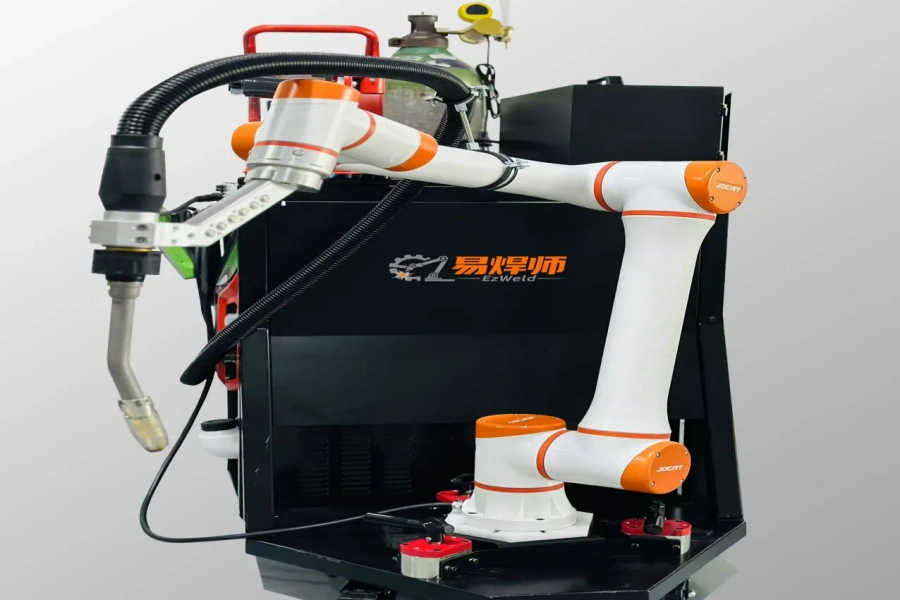
Key Metrics: Joint degrees of freedom (typically 6 axes) and joint rotation range (±360° is optimal). These determine whether a collaborative welding robot can flexibly adjust its posture in confined spaces to perform welding tasks at challenging angles (e.g., inside vehicle bodies, complex structural components).
Market Insight: Flexibility is one of collaborative robots’ core advantages, directly impacting the breadth of their application scenarios.
III. Lightweight Design, Hassle-Free Deployment: Self-Weight and Portability
Pain Point: Traditional industrial robots are bulky and difficult to relocate, making production line adjustments costly.
Key Metric: Robot body weight. Lighter robots (e.g., under 22kg for a 1.4-meter reach) enable easier and faster transportation, installation, and production line reconfiguration. This significantly enhances production flexibility and reduces secondary investment costs.
Market Insight: “Lightweight” design distinguishes cobot welding robots from traditional industrial robots and is key to rapidly adapting to production changes.
IV. Neural Hub, Swift Response: Communication Protocol is the Lifeline
Pain Point: Communication delays and instability can cause slow robot responses, jerky movements, or even errors.
Key Metric: Core Communication Protocol. EtherCAT, with its ultra-high speed (microsecond-level response) and exceptional stability, has become the preferred choice for high-end collaborative robots, far surpassing traditional protocols like CANopen. It ensures real-time transmission and precise execution of control commands while providing robust support for expanding external axes (e.g., positioners).
Market Insight: Stable and efficient communication forms the foundational layer for ensuring smooth cobot welding robot operation and future scalability.
V. Intelligent Processes Empower Welding: Software Packages Are the Soul
Pain Point: Software with limited functionality and complex operation restricts the full potential of robotic systems.
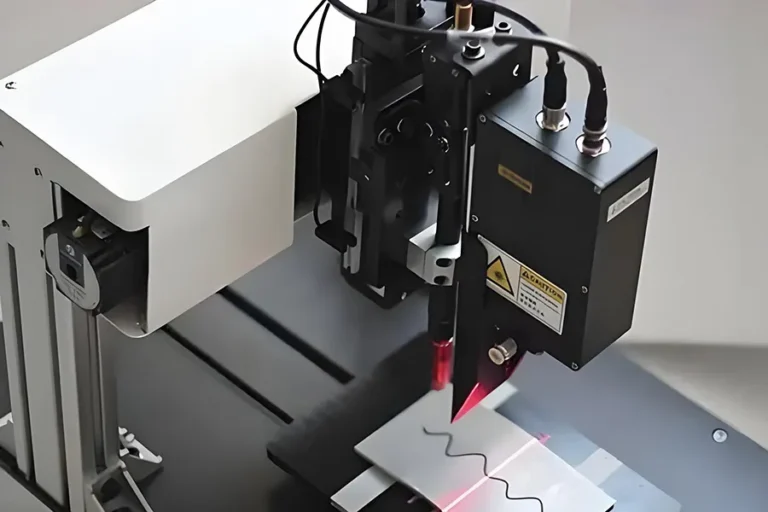
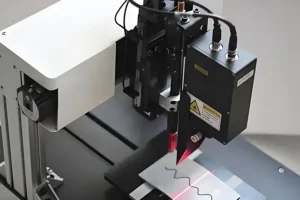
Key Metrics: Richness and intelligence of built-in welding process packages. Seek systems supporting advanced functions like multi-layer/multi-pass welding, intelligent arc tracking, complex oscillation (e.g., circular arc positioning), and intermittent welding. Crucially, evaluate integration capabilities with external devices (laser trackers, vision systems) to achieve “teach-free, programming-free” intelligent welding, significantly lowering technical barriers.
Market Insight: Software is central to enhancing automation levels and usability, determining what robots can do, how well they perform, and how easily they operate.
VI. Safety First, Operation Simplified: Safety and Usability Are Both Essential
Pain Points: Safety hazards and complex operational training hinder adoption.
Key Metrics:
Safety: Multiple safeguards (e.g., Level 10 collision detection protection, innovative power-off protection, over 100 startup self-checks) are essential. Black box (operational data logging) functionality enables rapid fault tracing and improves maintenance efficiency.
Usability: Intuitive drag-and-drop teaching, streamlined programming interfaces, and ergonomic teaching handles (with multifunctional buttons) are crucial. An excellent self-weight-to-load ratio (<4) ensures effortless maneuvering. The goal is enabling ordinary workers to operate a cobot welding robot after minimal training.
Market Insight: The “collaborative” nature of collaborative robots demands exceptionally high standards for safety and usability.
VII. Reliable, Durable, Future-Ready: Quality and Scalability as Foundations
Pain Points: High equipment failure rates and inability to adapt to future production line upgrades.
Key Metrics:
Quality Reliability: Strict adherence to automotive-grade standards (e.g., IATF 16949) in production and testing ensures long-term stable operation in harsh industrial environments.
Scalability: Supports multi-axis external linkage (e.g., 3-axis) and the ability to expand additional axes via high-speed buses (e.g., EtherCAT), reserving capacity for more complex welding tasks and future production line upgrades.
Market Insight: Reliability and scalability are crucial safeguards for long-term return on investment for your welding cobot.
Why is “EasyWeld” the Preferred Choice for Smart Manufacturing Upgrades in 2025?
After examining these dimensions in depth, you’ll discover that the “EasyWeld” collaborative welding robot achieves an optimal balance and leads the field across these critical metrics:
Faster: EtherCAT high-speed communication ensures millisecond-level response.
More Accurate: ±0.02mm repeatability for smooth motion control.
More Stable: Automotive-grade quality control, multi-layered safety safeguards, and black box logging for worry-free operation.
More Flexible: 6-axis 360° rotation with a lightweight body (e.g., 22kg) adapts to diverse scenarios.
Smarter: Rich process packages + powerful external expansion (laser/vision) enable programming-free welding.
Simpler: Intuitive drag-and-drop interface and ergonomic design ensure rapid operator mastery.
It does not merely replace traditional industrial robots, but rather leverages the “intelligence” and “flexibility” of collaboration to provide enterprises with a more cost-effective, easier-to-deploy, and safer automated welding solution, effectively addressing the dual pressures of rising labor costs and quality improvement.
Embracing the New Era of Intelligent Welding
By 2025, intelligent and flexible welding workshops will be the norm. Selecting a cobot welding robot that excels in performance, safety, reliability, ease of operation, and forward-thinking capabilities is a crucial step for enterprises to gain a competitive edge. Represented by advanced models, domestically produced high-end collaborative welding robots are leading this welding efficiency revolution through solid technical expertise and a deep understanding of user needs. Wise decisions begin with a precise grasp of core value. Now is the time to inject new intelligent capabilities into your production line with the right cobot welding robot!