
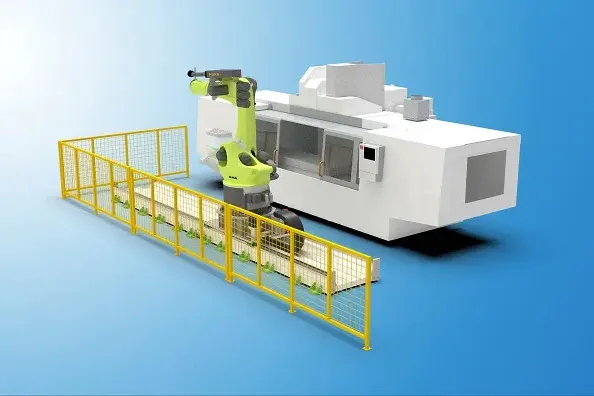
As the manufacturing sector evolves toward greater efficiency, stability, and flexibility, machining centers have gradually transitioned from traditional manual loading and unloading to automated production models centered around robotic systems. Throughout this transition, the ” 7 Axis Robot” combination has emerged in recent years as one of the most valuable solutions for factory automation upgrades, delivering increased production capacity, reduced reliance on manual labor, and more consistent product quality for enterprises.
1. 7 Axis Robot Solutions
Historically, machining centers relied heavily on manual labor for material handling, measurement, and transport—a practice that not only resulted in inconsistent efficiency but also posed significant safety risks. With the widespread adoption of robotic technology, automated loading and unloading has become an essential requirement within the industry. Key trends driving this shift include:
- Upgrading from single-machine automation to full-line automation;
- Transitioning from fixed-cycle production to Flexible Manufacturing Systems (FMS);
- Replacing manual labor with robots for material handling, high-frequency loading/unloading, and heavy-load operations;
- Enabling collaborative production across multiple workstations and devices;
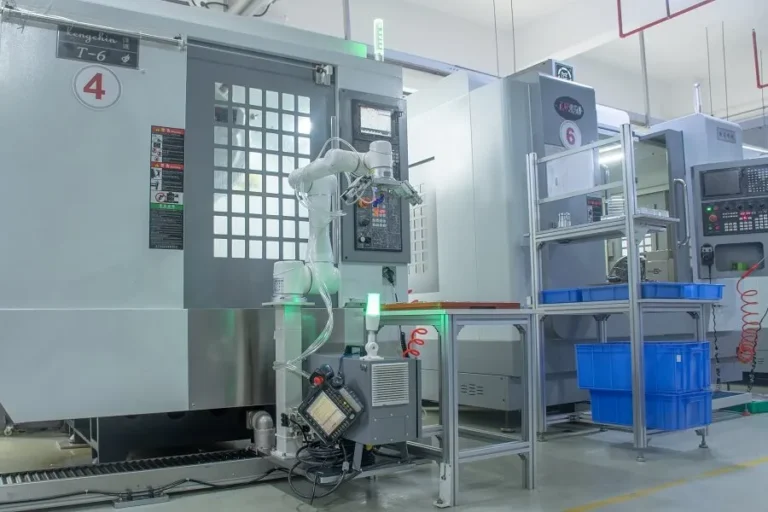
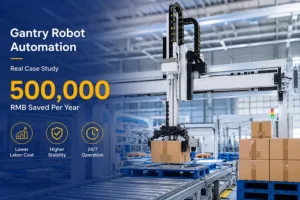
Within this evolving landscape, the addition of a robotic 7th axis grants the robot true “long-distance mobility,” allowing it to extend its reach beyond a single machining center to cover multiple workstations, thereby enabling full-line automation.
2. The Core Value of the Robotic 7th Axis in Machining Center Environments
2.1 Coverage of Multiple Machining Centers
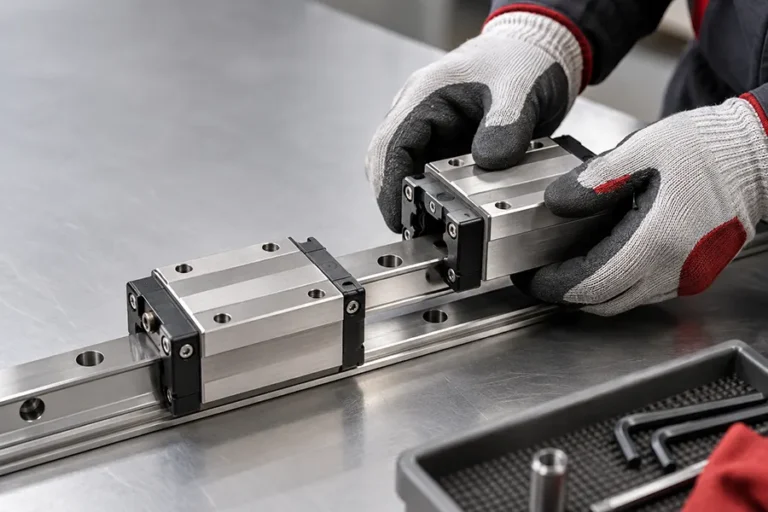
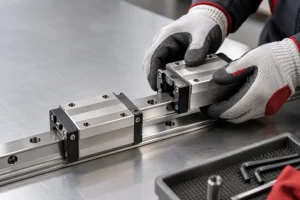
A single linear rail can accommodate 2 to 10 machining centers; the robot travels along this rail to serve multiple machines, thereby significantly boosting equipment utilization rates.
2.2 Enabling Flexible Scheduling
Product changeovers on the production line require no major structural modifications; the system can be adapted to new products simply by updating the software program.
2.3 Reducing Labor Costs
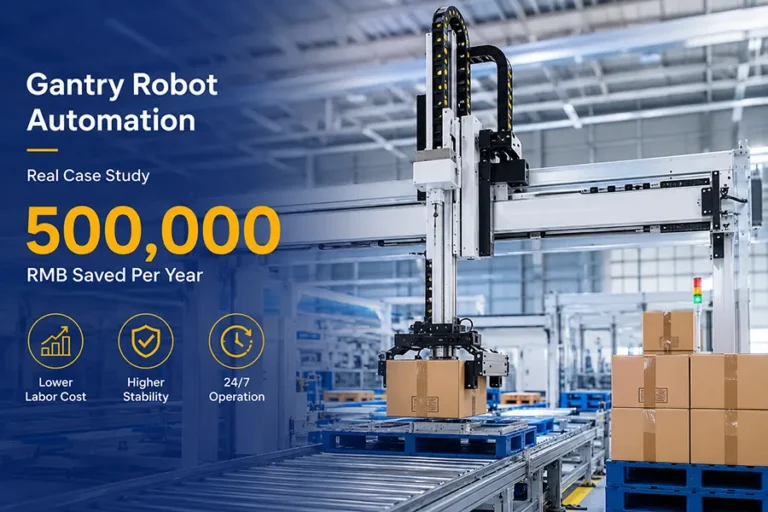
The system operates stably over long periods without the need for breaks, making it ideal for night shifts and continuous 24-hour production cycles.
2.4 Enhancing Loading and Unloading Efficiency
The robot maintains a consistent operational rhythm unaffected by fatigue, while simultaneously minimizing issues such as workpiece drops or surface damage caused by mishandling.
2.5 Meeting Heavy-Load Requirements
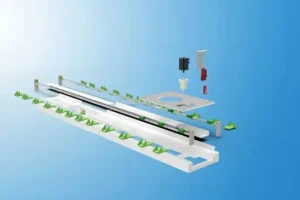
By utilizing a heavy-duty 7th axis, the system can facilitate the movement of robots capable of handling payloads ranging from 100 kg to over 1000 kg, making it highly suitable for industries involving the machining of large-scale workpieces.
3. Applicable Industries and Typical Application Scenarios
- Automated loading and unloading for CNC machining centers;
- Batch processing of aluminum, iron, and copper components;
- Automotive parts production lines;
- Automation in mold and die manufacturing. Machining of Motor Housings, Flanges, and Valve Bodies;
- Integrated Production Line for Handling, Inspection, and Storage.
Summary
For manufacturing facilities, automation upgrades are no longer merely about boosting efficiency; they represent a manifestation of core competitiveness:
- Rising labor costs have made robotic replacement an emerging trend.
- Fluctuating order volumes necessitate flexible manufacturing capabilities.
- Robot sharing across multiple machines yields a higher return on investment.
- Stable cycle times lead to a significant improvement in yield rates.
- 24-hour stable operation maximizes equipment utilization.
Over the next three to five years, the adoption of machining centers featuring robots paired with 7th-axis systems will significantly elevate the intelligence level of production lines, establishing a more competitive model for automated manufacturing.