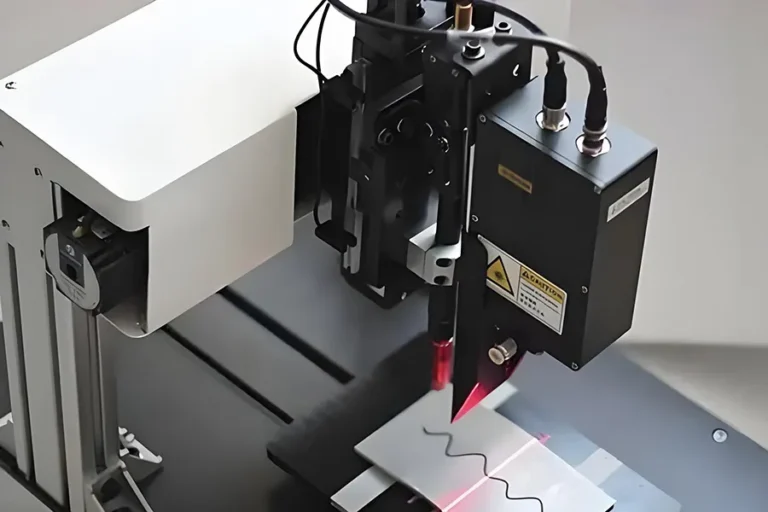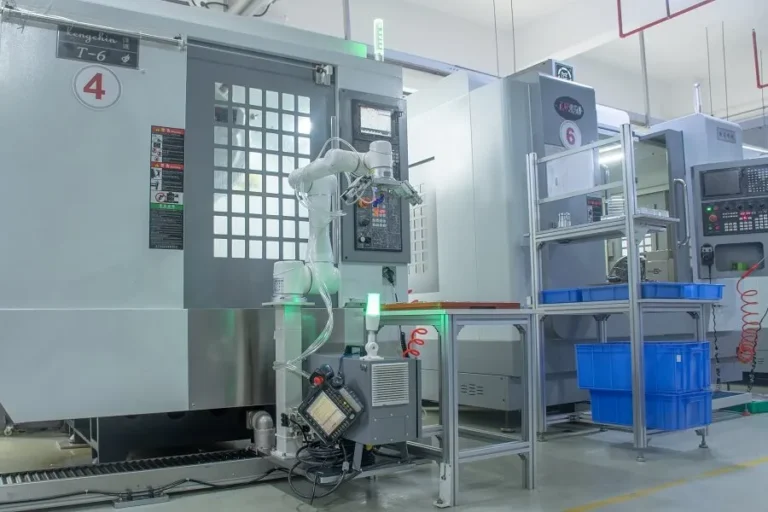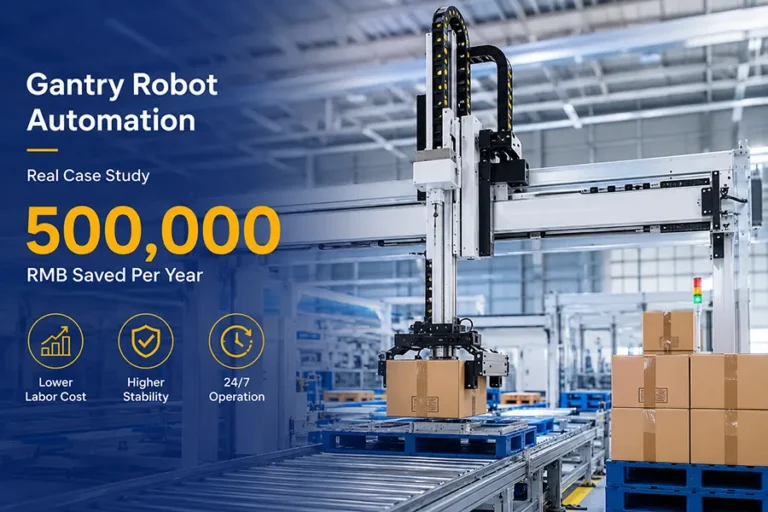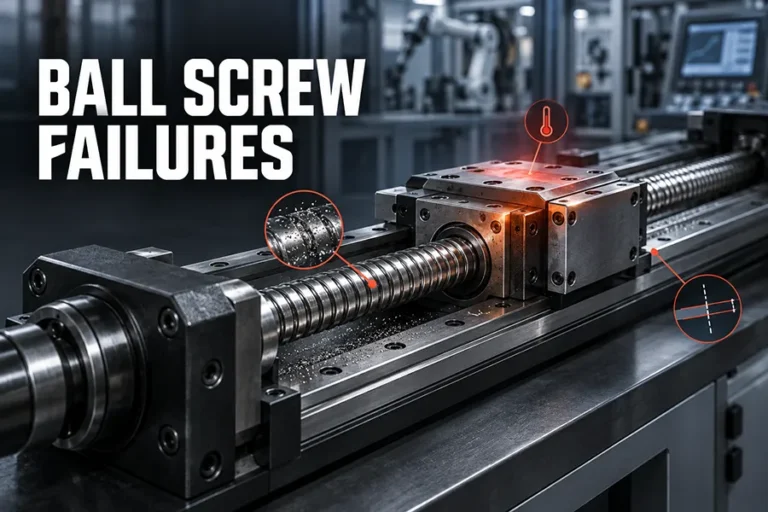
In recent years, as robots have played an increasingly important role in more and more manufacturing sub-sectors, and grinding, polishing, and deburring are indispensable basic processes in manufacturing, grinding robots have gradually come into focus.
1. What is a Grinding Robot?
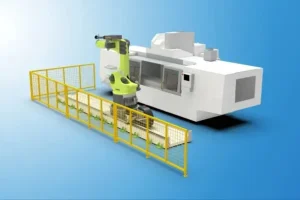
A grinding robot is an industrial robot that performs grinding tasks. It intelligently replaces manual grinding, improving work efficiency and ensuring a high product yield.
Currently, in an increasing number of robotic grinding operations, robots generally perform tasks such as deburring edges and corners, grinding welds, and deburring internal cavities.
Robot grinding currently mainly falls into two categories:
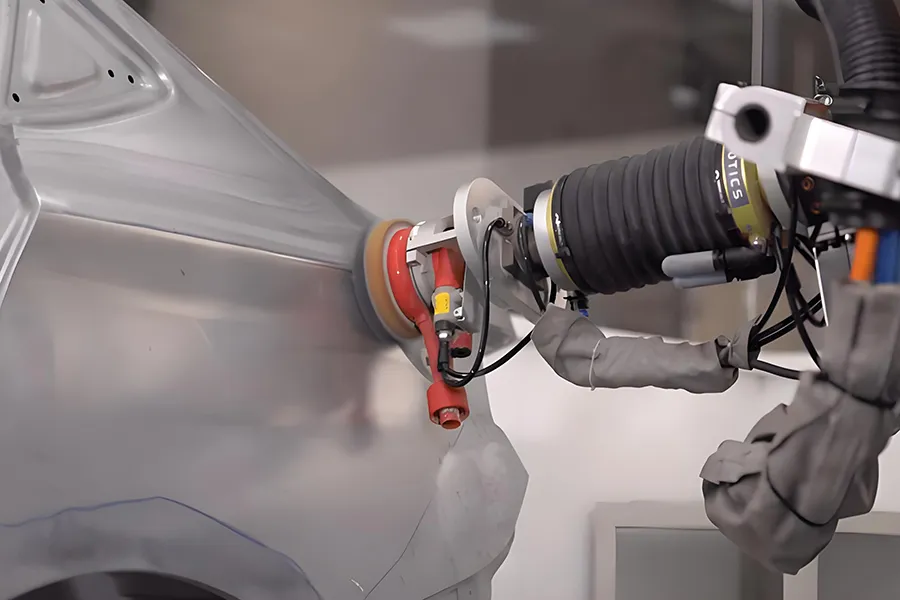
One type uses the robot’s end effector to hold the grinding tool and actively contact the workpiece, which remains relatively fixed. This method is typically used when the robot’s load capacity is limited and the workpiece is large in both weight and size; this is called a tool-type grinding robot.
The other type uses the robot’s end effector to hold the workpiece, and the workpiece is brought into close contact with the grinding tool for grinding, which remains relatively fixed. This method is typically used when the workpiece is small and requires high grinding precision; this is called a workpiece-type grinding robot. Currently, it is widely used in many industries such as 3C, hardware and furniture, medical equipment, auto parts, and small household appliances.
2. Overview of the Current Status of Constant Force Floating Tools for Robotic Grinding
Having understood what a grinding robot is, let’s now explore its world!
1. Tool-type Grinding Robots
This article mainly focuses on the first type, namely, the robot’s end effector holding the grinding tool. First, let’s discuss traditional grinding tools.
· Traditional Grinding Tools
Traditional grinding mainly includes five methods: milling, circumferential grinding, end face grinding, end face corner grinding, and planar eccentric grinding.
· Floating Grinding Tools
Mechanical grinding methods are mainly divided into rigid grinding and flexible grinding. Rigid grinding heads are characterized by low cost, but the processing effect is poor when the workpiece shape is complex. They are mainly used in situations where the workpiece is simple and the requirements are not high.
Based on the five traditional grinding methods, the high flexibility and high automation advantages of robots are integrated into the grinding field to develop floating grinding tools, i.e., flexible grinding. Currently, robotic grinding is mainly categorized into five types: closed-loop floating mechanisms, open-loop floating mechanisms, axial floating grinding tools, radial floating grinding tools, and robot force sensors.
Flexible force-controlled grinding systems, through built-in sensors, can detect various information in real time, such as grinding pressure, self-position, and acceleration. A unique gravity compensation algorithm ensures stable contact between the grinding equipment and the workpiece surface under any posture, guaranteeing constant grinding force. Flexible force-controlled grinding technology greatly compensates for the shortcomings of insufficient rigidity and low precision in domestically produced robots. High-precision compensation and easy-to-use operation not only improve the grinding process effect but also ensure grinding consistency.
The main advantages of robotic grinding are improved grinding quality and product surface finish, ensuring consistency, increased productivity, continuous production throughout the day, improved working conditions and quality of life for workers, long-term operation in hazardous environments, reduced requirements for worker operating skills, shorter product modification and replacement cycles, and reduced investment in equipment. Using grinding robots offers advantages such as long-term grinding operations, high productivity, high quality, and high stability.
3. What Application Scenarios are Suitable for Robotic Grinding?
Robotic grinding has a wide range of applications, especially suitable for the following scenarios:
3.1 Weld Grinding
In sheet metal processing, steel structures, cabinet manufacturing, construction machinery, pressure vessels, and metal furniture industries, welds often need to be ground after welding to make the surface smoother and more aesthetically pleasing. Robotic grinding can reliably remove excess weld material, reducing quality fluctuations caused by manual grinding.
3.2 Deburring of Castings
Casting surfaces often have flash, gates, burrs, and irregular protrusions. Manual handling is labor-intensive, dusty, and dangerous. Robotic grinding can be used for deburring and grinding cast iron parts, aluminum castings, automotive parts, and construction machinery castings.
3.3 Chamfering and Edge Trimming of Metal Parts
Machined metal parts may have sharp edges or burrs, affecting assembly safety and product quality. Robots can achieve stable chamfering using deburring tools or grinding wheels, improving consistency in batch processing. 4. Stainless Steel Product Grinding and Polishing
Stainless steel kitchenware, bathroom hardware, door and window fittings, decorative parts, and other products have high requirements for surface appearance. Robotic grinding and polishing can improve surface consistency and reduce problems such as uneven texture and inconsistent brightness caused by manual polishing.
3.4 Surface Treatment Before Coating
Before powder coating, painting, electrophoresis, or anti-corrosion coating, the workpiece surface usually needs to be ground, rust removed, oxide layer removed, or roughened. Robotic grinding can provide a more stable surface base for subsequent coatings, helping to improve coating adhesion and appearance quality.
Summary
For manufacturing enterprises that want to improve product quality, reduce reliance on manual labor, improve the workshop environment, and achieve automation upgrades, robotic grinding is not only a processing equipment choice, but also a process upgrade solution for intelligent manufacturing. With the continuous maturation of force control, visual recognition, and intelligent path planning technologies, robotic grinding will play an increasingly important role in more industrial fields.