
Robot welding: The Core Driving Force of Smart Manufacturing and Its Future Trends
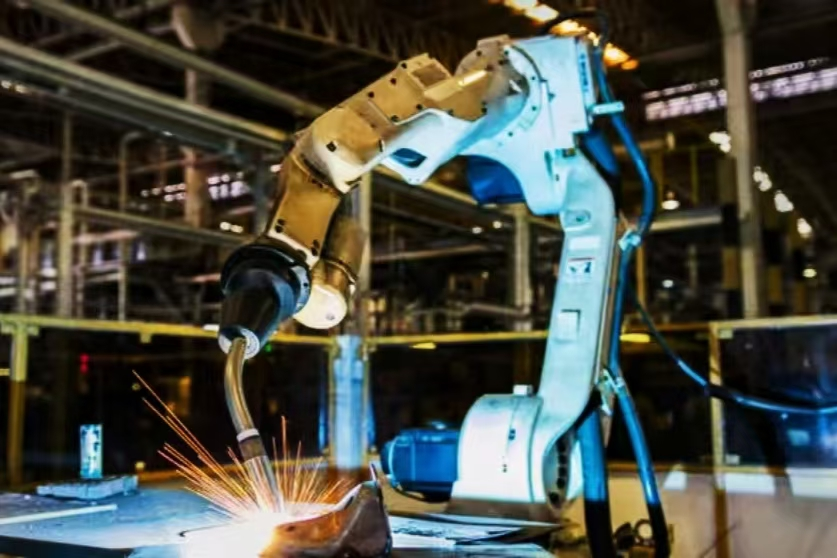
In the era of deep integration between industrialization and informatization, smart manufacturing has become the core direction of global industrial transformation. Among numerous key technologies supporting this transformation, Robot welding stands out as an indispensable pillar. By combining advanced robotics, precision control systems, and professional welding technology, Robot welding not only breaks through the limitations of traditional manual welding but also injects strong impetus into the high-quality development of various industries. From automotive component assembly to aerospace structure manufacturing, the application of Robot welding has significantly improved production efficiency, reduced operational costs, and ensured the stability of product quality, becoming a key symbol of industrial upgrading.
Transforming Traditional Welding with Intelligent Automation
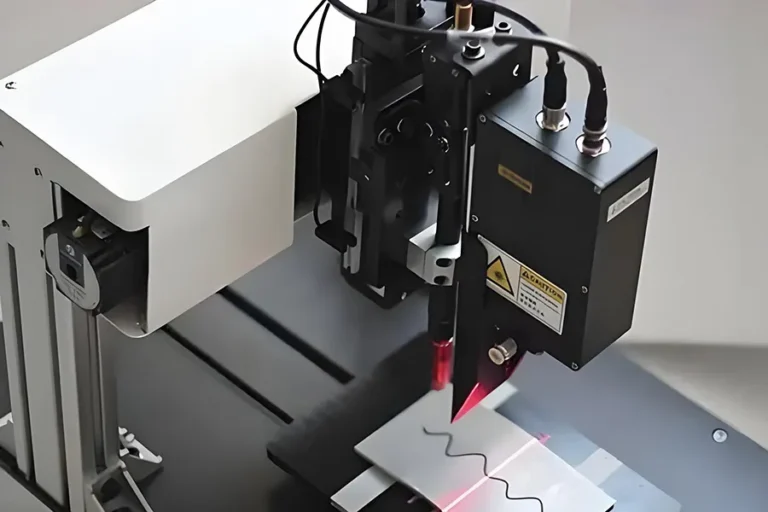
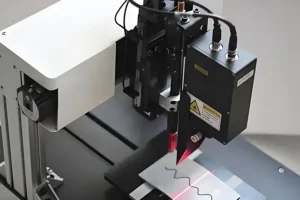
Traditional manual welding is often constrained by factors such as labor intensity, skill differences, and harsh working environments, leading to unstable welding quality and low production efficiency. In contrast, Robot welding relies on intelligent automation technology to achieve continuous, high-precision welding operations. Equipped with advanced sensors and visual recognition systems, high-precision Robot welding systems can automatically adjust welding parameters according to workpiece characteristics, ensuring uniform weld seams and reducing defect rates. Moreover, Robot welding can operate continuously in harsh environments such as high temperature, high humidity, and toxic gas, which not only protects the health of workers but also improves production continuity. In large-scale production scenarios, flexible Robot welding applications can be quickly switched between different workpieces, enhancing the adaptability and flexibility of production lines, and effectively meeting the diverse production needs of modern enterprises.
Core Technical Advantages of Robot welding
The widespread adoption of Robot welding in the industrial field is attributed to its outstanding technical advantages. Firstly, in terms of precision control, Robot welding can achieve millimeter-level positioning accuracy through pre-programmed paths and real-time feedback adjustment, which is crucial for manufacturing high-precision components such as aerospace parts and precision machinery. Secondly, in terms of production efficiency, a single Robot welding system can replace multiple manual welders, and its continuous operation capability significantly shortens the production cycle. For example, in the automotive manufacturing industry, Robot welding automation technology has realized the automated assembly of car bodies, reducing the welding time per vehicle from hours to minutes. Additionally, Robot welding has excellent repeatability, ensuring that each welding operation is consistent with the standard, which greatly reduces the rework rate and improves product qualification rates. Finally, the intelligent management of Robot welding systems allows for remote monitoring and data analysis, helping enterprises optimize production processes and achieve lean management.
Technological Innovations Promoting the Development of Robot welding
With the continuous advancement of technologies such as artificial intelligence, Internet of Things (IoT), and big data, Robot welding is evolving towards a more intelligent and integrated direction. The integration of AI technology enables Robot welding systems to have self-learning and adaptive capabilities. For instance, intelligent Robot welding solutions can automatically identify weld joint positions and adjust welding strategies based on real-time data, even when facing workpiece deviations or changes in environmental conditions. The application of IoT technology realizes the interconnection between multiple Robot welding equipment, forming a smart welding production line that can coordinate operations and share data. This not only improves the overall efficiency of the production line but also lays the foundation for the construction of smart factories. Furthermore, the development of lightweight and compact Robot welding equipment expands its application scope, making it suitable for small and medium-sized enterprises and narrow working spaces that were previously difficult to cover.
Future Development Trends of Robot welding
Looking ahead, Robot welding will continue to play a core role in the process of smart manufacturing, with several prominent development trends. Firstly, the integration of Robot welding with digital twin technology will become more in-depth. By building a digital twin model of the welding process, enterprises can simulate, predict, and optimize Robot welding operations in a virtual environment, reducing the trial-and-error cost of physical production and improving process reliability. Secondly, the popularization of collaborative Robot welding will accelerate. Collaborative robots (cobots) used in Robot welding can work safely alongside human workers without the need for complex safety barriers, which is particularly suitable for small-batch, customized production scenarios and helps improve the flexibility of production. Thirdly, the development of green and energy-saving Robot welding technology will attract more attention. By optimizing welding processes and adopting energy-efficient components, Robot welding systems can reduce energy consumption and environmental pollution, in line with the global trend of low-carbon development. Finally, the service-oriented development of Robot welding will become a new direction, with more enterprises providing integrated solutions including Robot welding equipment, maintenance, and technical training, to meet the diverse needs of users. In summary, Robot welding, as a core technology of smart manufacturing, has fundamentally changed the pattern of industrial welding production. Its advantages in precision, efficiency, and intelligence have made it an irreplaceable part of various industries. With the continuous advancement of related technologies and the expansion of application scenarios, Robot welding will continue to innovate and develop, contributing more to the transformation and upgrading of global manufacturing and the realization of high-quality, intelligent production. Whether for large enterprises pursuing scale effects or small and medium-sized enterprises seeking technological upgrading, Robot welding is undoubtedly a key driving force to enhance core competitiveness in the future industrial landscape.