
Metal cutting machine tools are among the most crucial equipment in modern manufacturing, widely used in aerospace, automotive manufacturing, mold making, medical devices, and precision parts industries. Understanding the key characteristics of metal cutting machine tools helps companies improve processing efficiency and manufacturing quality.
1. What are Metal Cutting Machine Tools?
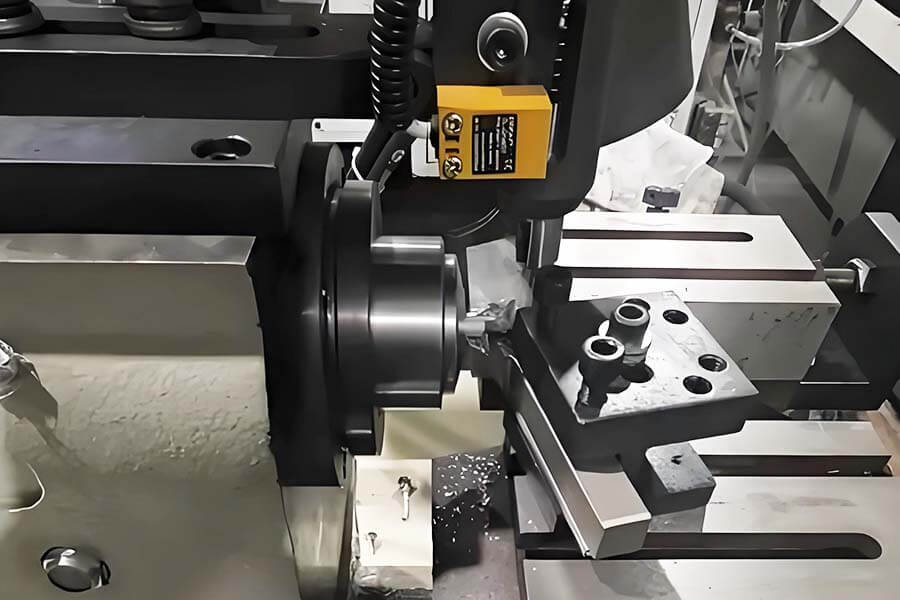
Metal cutting machine tools are devices that use cutting tools to cut metal. Depending on their structure and function, machine tools can perform turning, milling, drilling, grinding, and other machining operations, forming the foundation of parts manufacturing.
2. Types Commonly used Metal Cutting Machine Tools Include
2.1 Lathes
A lathe is a machine tool used to machine rotationally symmetrical workpieces such as cylinders, cones, and spheres. Common lathes include conventional lathes, CNC lathes, and multi-axis composite lathes. Conventional lathes are primarily manually operated and suitable for processing simple workpieces. CNC lathes enable automated production and high-precision machining, suitable for machining complex shapes and workpieces with high precision requirements. Multi-axis composite lathes can perform multiple precision machining operations simultaneously.
2.2 Milling Machines
Milling machines are metal cutting machine tools used to machine non-rotationally symmetrical workpieces such as planes, curved surfaces, and cavities. Common types of milling machines include vertical milling machines, horizontal milling machines, gantry milling machines, and CNC milling machines. Vertical milling machines are mainly used for machining small to medium-sized parts, while horizontal milling machines are suitable for machining large parts. Gantry milling machines are suitable for machining large molds, parts, and workpieces with complex contours. CNC milling machines can automatically complete machining of various shapes and angles.
2.3 Drilling Machines
Drilling machines are machine tools used for hole machining, mainly for drilling, reaming, and tapping. Common types of drilling machines include conventional drilling machines, diaphragm drilling machines, swing-arm drilling machines, and CNC drilling machines. Conventional drilling machines are suitable for machining small holes. Diaphragm drilling machines are suitable for multiple holes of the same diameter. Swing-arm drilling machines are suitable for machining holes in large workpieces. CNC drilling machines are suitable for efficient, precise, and multi-threaded hole machining.
2.4 Grinding Machines
Grinding machines are machine tools used to process workpieces with high precision and high surface quality, mainly used in the manufacture of gears, rollers, bearings, and other components. Common types of grinding machines include surface grinders, cylindrical grinders, internal grinders, and CNC grinders. Surface grinders are suitable for machining planes, cylindrical grinders are suitable for machining cylinders and spheres, and internal grinders are suitable for machining holes and tubes. CNC grinders are suitable for efficient, precise, and automated grinding.
2.5 Shearing Machines
Shearing machines are machine tools used to shear various metal plates. Common types of shearing machines include hydraulic shearing machines, mechanical shearing machines, and CNC shearing machines. Hydraulic shearing machines are suitable for shearing small and medium-sized steel plates. Mechanical shearing machines are suitable for shearing medium and large steel plates. CNC shearing machines can achieve multi-station, high-efficiency, high-precision, and automated shearing operations.
2.6 Punching Machines
Punching machines are machine tools used for punching, thread punching, forming, and breaking operations. Common types of punch presses include mechanical punch presses, hydraulic punch presses, and CNC punch presses. Mechanical punch presses are suitable for small and medium-sized punching, offering advantages such as simple structure, easy operation, and low price. Hydraulic punch presses are suitable for large punching and high-precision machining, offering advantages such as good stability and low energy consumption. CNC punch presses enable automated production, high efficiency, and high precision punching.
3. Characteristics and Requirements of Machine Tool Lubrication
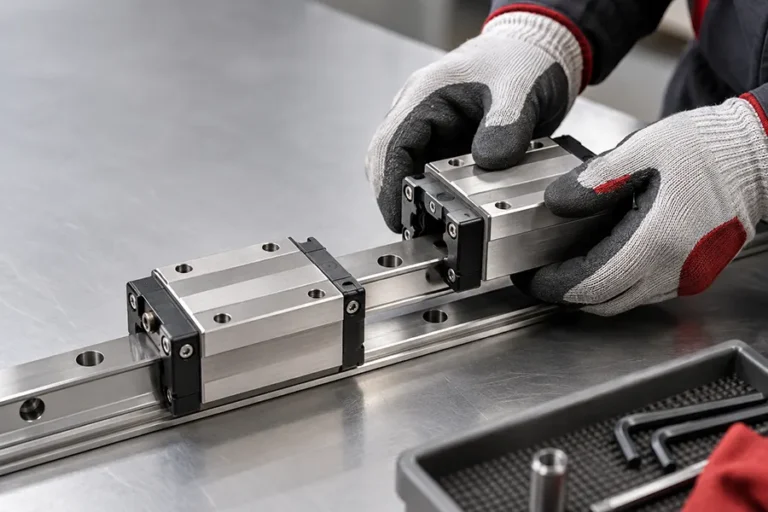
The main components of machine tools are mostly typical mechanical parts, highly standardized, universal, and serialized. Examples include sliding bearings, rolling bearings, gears, worm gear pairs, rolling and sliding guides, screw drive pairs (lead screw and nut pairs), clutches, hydraulic systems, cams, etc., each with different lubrication requirements.
3.1 Machine Tool Operating Environment Conditions
Metal cutting machine tools are typically installed and used indoors. In summer, the highest ambient temperature is generally controlled below 35°C. In winter, when the temperature is below 5°C, heating methods are often used to keep the ambient temperature above 0°C. High-precision machine tools require a constant-temperature air-conditioned environment, generally around 20 ± 1°C. However, due to the high precision requirements and automation levels of many machine tools, the requirements for the viscosity, oxidation resistance (service life), and cleanliness of lubricating oil are quite stringent.
3.2 Machine Tool Operating Conditions
Different types and sizes of machine tools, and even within the same type of machine tool, can have significantly different operating conditions depending on the workpiece being processed. Lubrication requirements vary. For example, the requirements for lubrication methods and lubricants differ greatly between the grinding wheel spindle bearings of high-speed internal grinding machines and the heavy-duty, low-speed spindle bearings of heavy-duty machine tools. The former requires oil mist or oil/air lubrication systems and lower viscosity lubricating oils, while the latter requires oil bath or pressure circulation lubrication systems and higher viscosity oils.
3.3 Machine Tool Lubricant Compatibility
Most machine tools use lubricating coolant. The mixing of lubricating oil with coolant often leads to oil emulsification and deterioration, rusting of machine parts, expansion and deformation of rubber seals, and bubbling and peeling of paint coatings on parts. Therefore, the compatibility of the oil with lubricating coolant, rubber seals, and paint materials, as well as the prevention of oil leaks, must be considered. Especially with the increasing automation of machine tools, universal lubricating/cooling oils are used on some automated and CNC machine tools, serving as both lubricants and coolants.
Summary
Metal cutting machine tools are indispensable core equipment in the manufacturing industry, capable of meeting diverse production needs from roughing to precision machining. Understanding their working principles, machine tool types, and key operating points can not only improve machining quality but also help companies maintain a competitive edge in manufacturing.