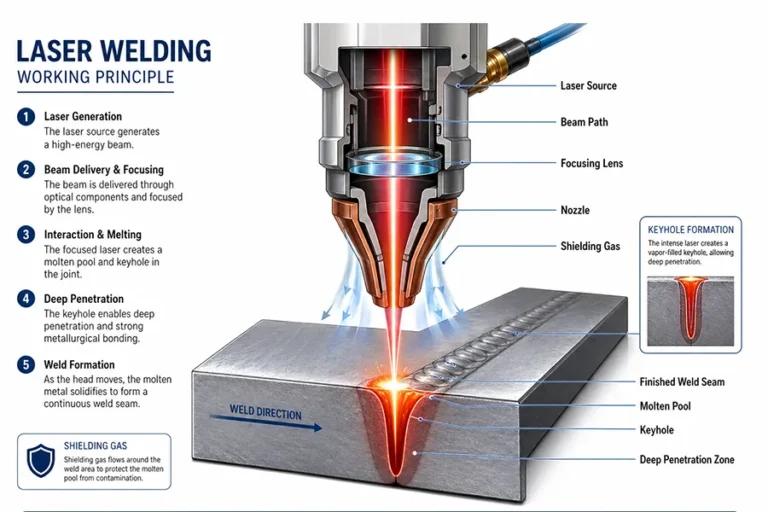

Whether in metal processing, automotive manufacturing, or high-precision parts production, laser welding machines offer efficient, high-precision, and highly uniform welding solutions. However, for first-time buyers or those replacing equipment, understanding the pricing and selection principles of laser welding machines is crucial. This article will provide laser welding machines price in 2025 and share purchasing advice.
Laser Welding Machines Price
The price of laser welding machines varies depending on brand, power, laser type, configuration, and other characteristics. Based on market analysis, the approximate prices in 2025 are as follows:
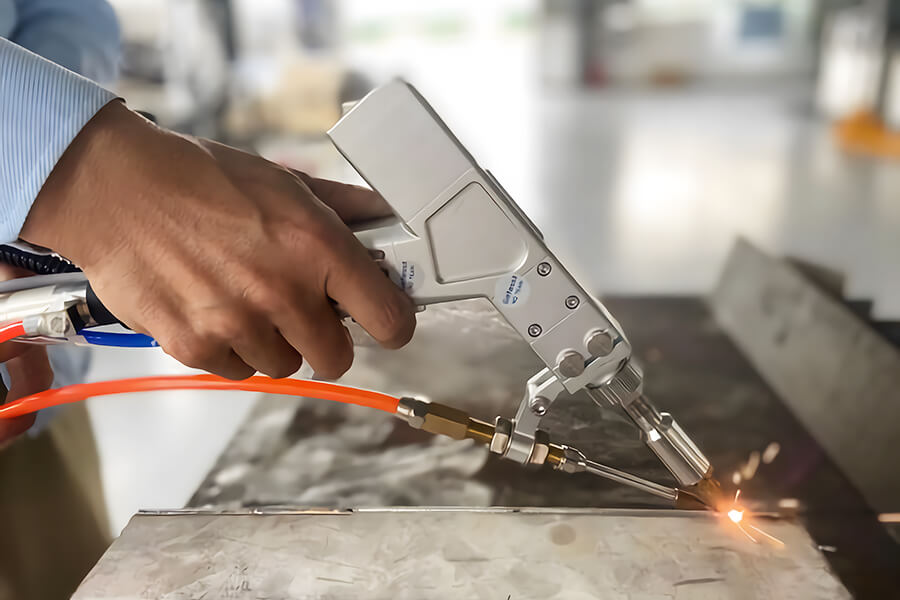
1. Handheld Low-Power Laser Welding Machine (100-500 W)
- Price: Approximately $3,000 to $10,000;
- Applications: Small factories, jewelry industry, electronic component welding, laboratory or repair needs. Features: Portable, easy to use, suitable for applications with smaller welding requirements.
2. Medium-power laser welding machine (500-1500 W)
- Price: Approximately $10,000 – $25,000;
- Applications: Automotive parts, mechanical parts, small to medium-sized production lines. Features: High stability, supports continuous welding and medium-scale production.
3. High-power laser welding system (1,500 W or above)
- Price: Approximately US$25,000 – Over US$80,000;
- Applications: Large factories, mass production, industrial precision applications. Features: Typically equipped with automated conveying and pathing systems and robotic arms, ideal for high-speed, high-precision welding.
Main Factors Affecting Price
1. Laser Type
- Fiber Laser: High efficiency, low maintenance costs, suitable for metal welding.
- CO2 Laser: Suitable for various non-metallic materials or special industrial applications.
- Pulsed Laser vs. Continuous Laser: Pulsed lasers are suitable for micro-welding and high-precision parts processing, while continuous lasers are suitable for micro-welding.
2. Power Level
Higher power results in faster welding speeds and allows for the processing of thicker materials, but also significantly increases the price.
3. Automation and Additional Functions
- Automatic feeding system
- Welding robotic arm
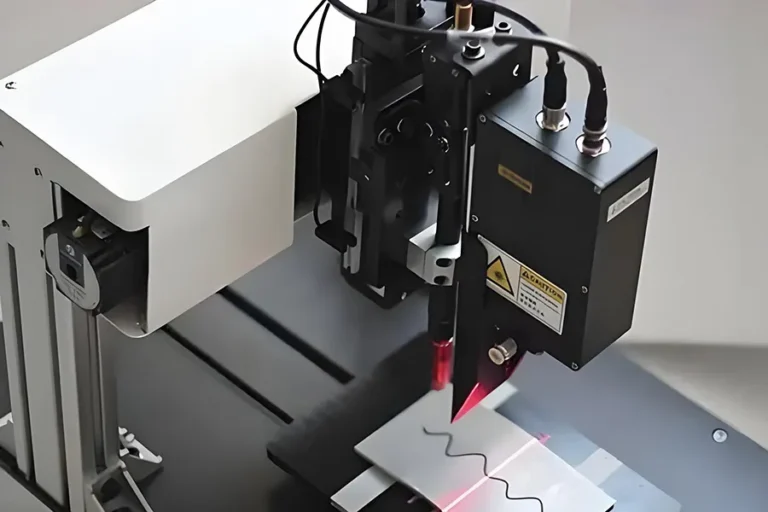
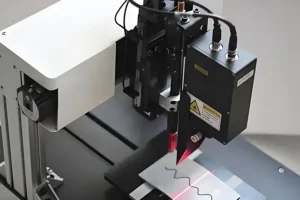
- Vision-assisted system and welding software
- Protective cover and dustproof system. These features can improve production speed and welding accuracy, but will increase machine costs.
4. Brand and After-Sales Service
Reputable brands (such as UMW, Han’s Laser, and Bodor) offer more comprehensive after-sales service in areas such as training and consumables.
5. Consumables
Local brands offer better value for money and are more suitable for SMEs and NGOs. International brands are more expensive, but are generally more stable and offer better long-term service.
Purchase Recommendations
1. Choose power based on production needs:
- Small repair or precision welding: 100-500W handheld or benchtop machine.
- Medium output: 500-1500W.
- Semi-automatic medium output: 1500W and above fully automatic machine.
2. Focus on cost-effectiveness
If only used for parts welding, it is best to choose a machine based on unit cost for better economic efficiency. Choosing a brand focused on welding functions will be cheaper. UMW’s products offer reasonable unit costs in the low-to-medium power welding market, making them well-suited for such applications.
3. Consider After-Sales Service and Technical Support
Long-term operating costs also depend on maintenance cycles, consumable supply, technical training, and remote support. It is recommended to focus on brands that offer after-sales service guarantees.
4. Budget and Return on Investment
In addition to the initial purchase cost, focus should be placed on the overall benefits resulting from increased productivity, labor cost savings, and consistent product quality.
Conclusion
By 2025, laser welding machines will become an everyday necessity in manufacturing. To purchase the right model, consider not only cost but also power, laser class, level of automation, and after-sales service. Please contact us for more product quotes.