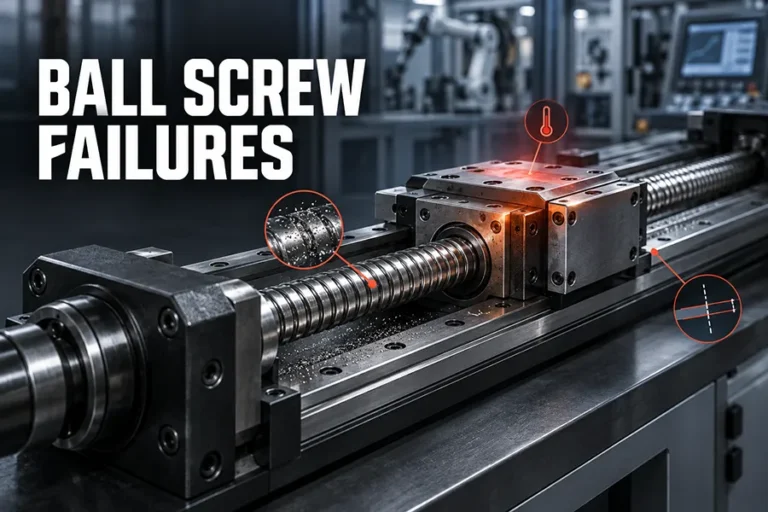
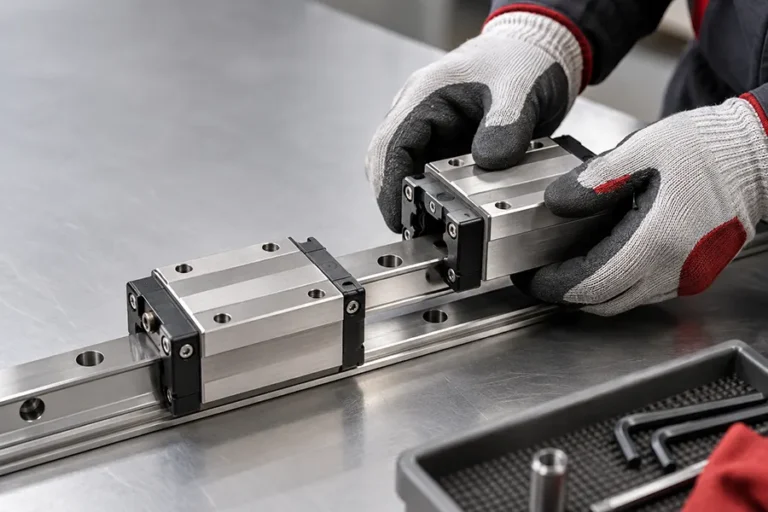
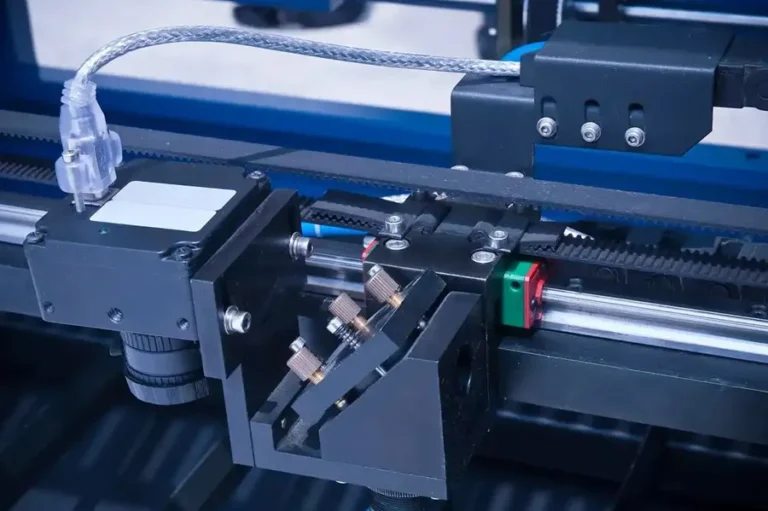
In previous articles, we’ve covered the history, features, and structure of ball screws—mostly theoretical insights. When it comes to practical ball screw selection and application, the market offers a wide range of options. To find the right product that aligns with your specific production requirements, gaining a clear understanding of ball screw precision grades is a critical prerequisite.
1. Core Evaluation Indicators for Ball Screw Quality
Ball screw quality is differentiated by two key assessment items, which directly define its precision level:
1.1 Lead Accuracy: The Core of Ball Screw Precision
The primary item for specifying ball screw precision is “lead accuracy” (see Notes*). It refers to the specifications for:
The cumulative lead error and variation corresponding to the nut’s effective travel or the screw’s effective thread length;
The lead error, the variation value within any 300mm segment of the total thread length, or the variation when rotating one full turn at any point within the effective thread length.
The surface of a ball screw should be free of defects like cracks, functional scratches, burrs, and rust—these flaws could compromise its transmission stability.
2. Ball Screw Precision Grade Classifications (JIS & ISO Standards)
Ball screw grades follow two widely recognized industrial standards: JIS (Japanese Industrial Standards) and ISO 3408-1:1991.
2.1 JIS Classification: 6 Ball Screw Grades
JIS categorizes ball screws into 6 grades: C0, C1, C3, C5, C7, and C10. These are split into two types:
Precision ball screws: 4 grades (C0, C1, C3, C5) (suited for high-precision equipment like CNC machines);
Transmission use: 2 grades (7, 10) (fit for general power transmission setups).
3. Key Terms Related to Ball Screw Precision
To fully grasp ball screw performance, clarify these core terminology:
3.1 Thread Groove
The threaded space between the screw and nut where the ball screw’s balls roll.
3.2 Ball Screw Lead
The axial distance the nut travels when the ball screw’s screw rotates one full turn.
3.3 Reference Lead (Nominal Lead)
The designed theoretical lead of the ball screw, also called the nominal lead.
3.4 Actual Lead
The lead obtained by measuring a physical ball screw.
3.5 Cumulative Lead Error
The difference between the ball screw’s cumulative actual lead (measured total travel) and cumulative reference lead (theoretical total travel).
3.6 Variation
The maximum width between two lines (parallel to the cumulative representative lead) that enclose the ball screw’s actual lead data. It includes 3 items:
a) Value corresponding to the nut’s effective travel or the ball screw’s effective thread length;
b) Value within any 300mm segment of the ball screw’s effective thread length;
c) Value when rotating one full turn at any point within the ball screw’s effective thread length.
By mastering these details about ball screw precision grades, evaluation indicators, and related terminology, you can make more informed choices when selecting ball screws that match your equipment’s performance needs. This ensures optimal operational accuracy and enhances the reliability of your industrial systems.




-scaled.webp "Ball Screw Precision Grades Explained: A Complete Guide for Selection")