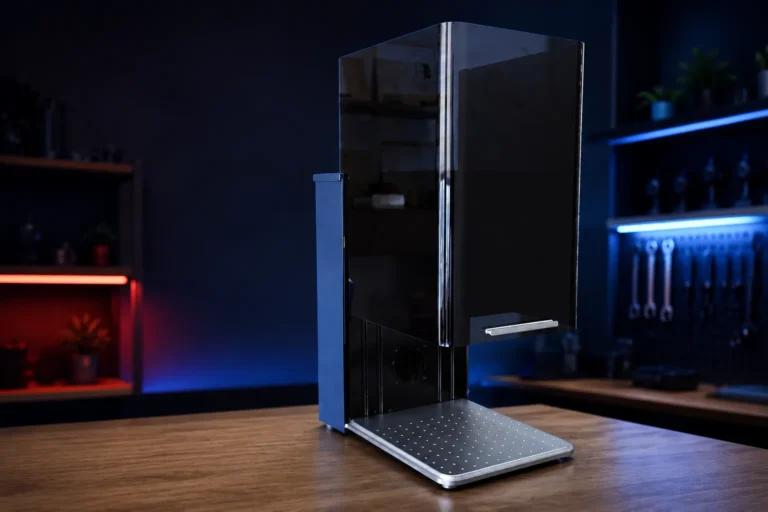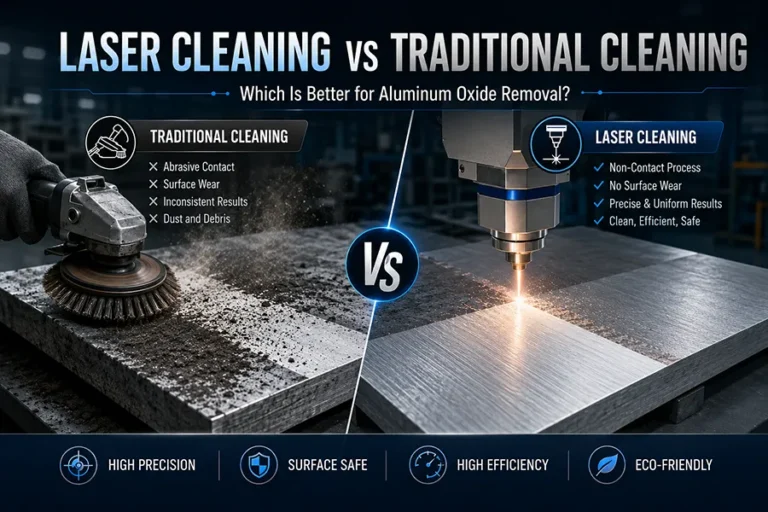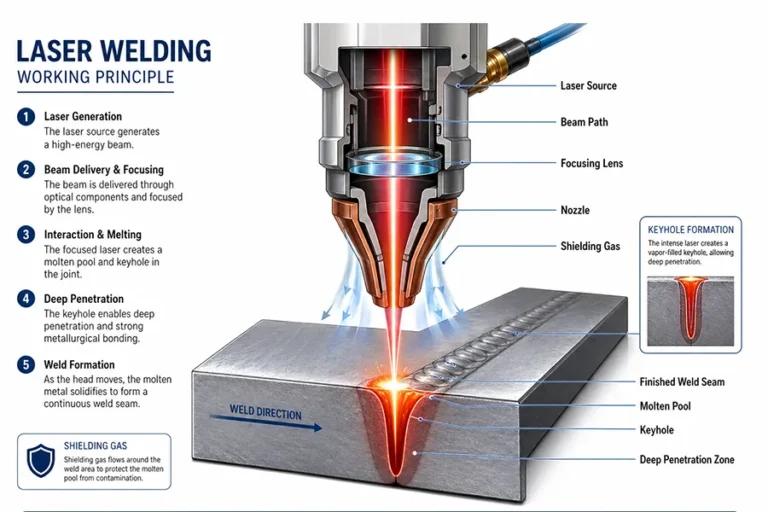
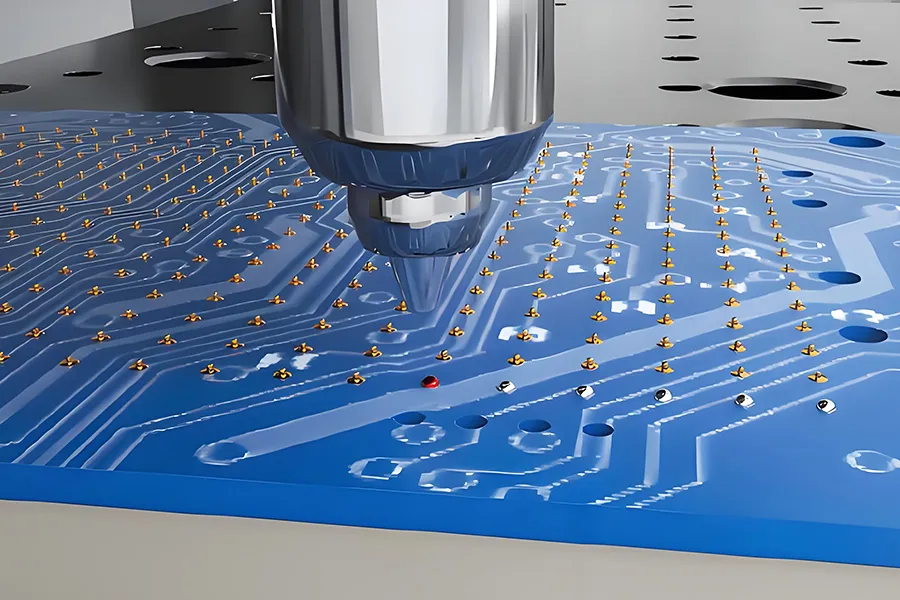
With the continuous development of laser technology, laser engraving machines have been widely used in industrial manufacturing, advertising signage, mold processing, and other fields. This article will systematically introduce the basic knowledge of laser engraving machines, helping readers to fully understand their working principles, main types, and application scenarios.
1. What is a Laser Engraving Machine?
Let’s start with some concepts of laser engraving. What exactly is laser engraving? In the traditional concept of engraving, we imagine a master craftsman using a carving knife or power tools to carve out exquisite patterns.
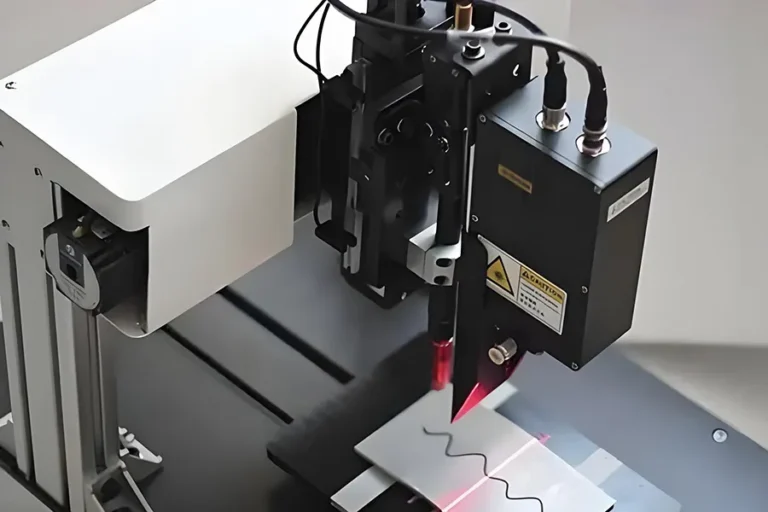
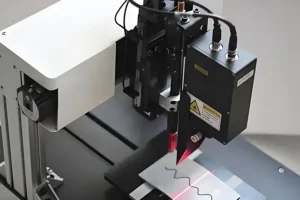
Laser engraving, on the other hand, uses laser technology for engraving. The principle is to use the thermal energy of the laser to burn or cause chemical changes on the surface being engraved, creating engraving marks.
Compared to handheld tools, the advantages of a laser engraving machine are that the engraving of text and patterns can be controlled, the size can be controlled, and the engraved patterns are more precise. The disadvantage is that it lacks the three-dimensional effect of manual physical engraving. Therefore, laser engraving machines are mainly used for shallow marking.
2. Structure of a Laser Engraving Machine
Now that we’ve clarified the concept, let’s discuss the structure of a laser engraving machine. The function of a laser engraving machine is mainly achieved through several major components: software control, mechanical transmission, and a laser light source. The software serves as the human-machine interface, used for editing images and text, adjusting parameters, and starting and stopping the machine.
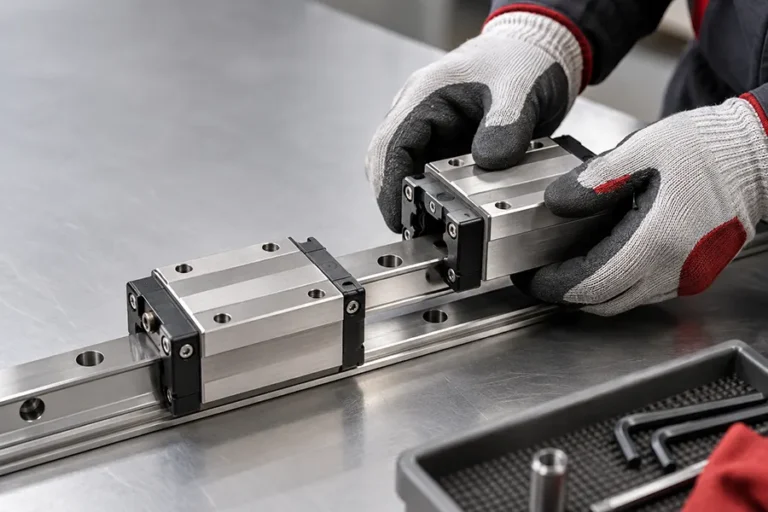
Traditional engraving machines use stepper motors or servo motors for mechanical transmission. However, due to the characteristics of lasers, many modern machines now use galvanometer systems, controlling the position of the laser through minute movements of the mirrors.
The laser light source is the core component of the laser engraving machine. The characteristics of the light source determine the materials and effects that the laser machine can engrave. The energy level significantly affects the engraving depth and speed.
3. Classification of Laser Engraving Machine Light Sources
Currently, common light sources for laser engraving machines include CO2 light sources, fiber optic light sources, violet light sources, green light sources, and diode light sources. They have different laser wavelengths, resulting in significant differences in engraving performance.
- CO2 laser engraving machines are mainly suitable for engraving non-metallic materials such as wood, leather, and plastic.
- Fiber optic light sources are mainly used for engraving metals or materials with high density and painted surfaces. Wood is generally difficult to engrave unless it is very dense and hard.
- Violet light sources are a relatively high-end light source, offering very fine engraving and a wide range of applications.
- Green light sources are often used for creating three-dimensional images within acrylic materials. It can engrave transparent materials such as glass.
- Diode light source: This light source, originally used for stage lighting, has undergone a remarkable transformation in the laser engraving industry. Its engraving principle is somewhat similar to using a magnifying glass to light a cigarette under the sun.
4. Selection Criteria for Laser Engraving Machines
Many people who want to buy a laser engraving machine are most concerned about this question. Everyone wants to choose a practical and economical laser machine. Therefore, before choosing, you can understand the advantages and disadvantages of various laser machines (see section V).
4.1 CO2 Laser Engraving Machine
- Advantages: Wide range of engravable materials (wood, leather, plastic, rubber, etc.), high power, fast engraving speed, and high precision.
- Disadvantages: The machine is heavy, usually 40-50 kg, making it inconvenient to move. The price is generally moderate, suitable for factories.
4.2 Fiber Laser Engraving Machine
- Advantages: High engraving precision and fast speed, suitable for mass production in factories and can be integrated into factory automation production lines.
- Disadvantages: The machine is generally more expensive, approximately 15,000 yuan or more, and relatively large and heavy (over 30 kg).
4.3 UV Laser Engraving Machine
- Advantages: Wide range of engravable materials, can engrave both metals and non-metals. Can achieve multi-purpose use with one machine.
- Disadvantages: Expensive, due to the characteristics of the UV light source, the machine is generally 20,000-30,000 yuan or more, and also relatively heavy. Suitable for high-end manufacturing.
4.4 Green Laser Engraving Machine
- Advantages: Can achieve 3D engraving and 3D positioning engraving.
- Disadvantages: Also large in size and expensive.
4.5 Diode Laser Engraving Machine
- Advantages: Low price, as low as under 1,000 yuan, generally not exceeding 3,000 yuan, small size, and easy to move.
- Disadvantages: Slow engraving speed, cannot engrave pure metals. Due to speed limitations, it is generally more suitable for personal DIY home use or small-batch customization by small and medium-sized businesses.
Summary
As an important processing equipment in modern manufacturing, laser engraving machines are continuously driving various industries towards high precision, automation, and intelligence. By understanding the basic knowledge of laser engraving machines, including working principles, equipment types, and application fields, users can more scientifically select and use the equipment, thereby obtaining higher processing quality and economic benefits.